
What is the difference between a fort, and a fortress?
When exploring historic military sites, you’ll often come across the words fort and fortress. At first glance, they may seem interchangeable.
After all, both describe defensive structures built to protect people, territory, and important strategic locations.
However, there is a difference between the two terms.
A fort is generally a defensive structure designed to protect a particular location, such as a harbor, military outpost, border crossing, or settlement.
A fortress, on the other hand, usually refers to a larger or more extensive fortified place, sometimes made up of several defensive structures working together.
The distinction isn’t always strict.
Throughout history, the words have sometimes been used interchangeably, and their meanings have changed depending on the country, language, and military period.
Still, understanding how they are commonly used makes it easier to recognize the purpose and design of historic fortifications.
Let’s take a closer look at what makes a fort different from a fortress, how these structures were built, and some famous examples you can still visit today.

What is a Fort?
A fort is a military structure built to defend a specific location against enemy attacks.
It could protect a strategic harbor, guard a river crossing, secure a border, or serve as a base for soldiers stationed in a particular area.
Forts have existed for thousands of years, although their designs changed considerably as military technology developed.
Some were relatively simple wooden or earthen structures, while others featured thick stone walls, artillery platforms, defensive ditches, and elaborate layouts.
Unlike the image of a medieval castle that many people have in mind, a fort doesn’t need towers, a moat, or decorative stone walls to qualify as a defensive structure.
Its design depends on its purpose, location, available materials, and the weapons used during the period in which it was built.
Main Characteristics of a Fort
Although forts can look very different from one another, many share a few common characteristics:
- A specific defensive purpose: A fort is usually built to protect a particular strategic point, such as a harbor, road, mountain pass, or military outpost.
- A permanent or temporary structure: Some forts were designed to last for centuries, while others were built quickly during military campaigns.
- A military presence: Many forts included barracks, storage buildings, ammunition rooms, and spaces for soldiers to live and work.
- Defensive features: Depending on the period, they might have walls, earthworks, ditches, watchtowers, gun positions, or other protective elements.
- A strategic location: Forts were often placed near waterways, coastlines, borders, roads, or elevated ground to control movement and protect important routes.
It’s worth remembering that not every fort had all these features.
A temporary wooden fort built during a campaign would look very different from a permanent coastal fort designed to withstand artillery fire.
Famous Examples of Forts
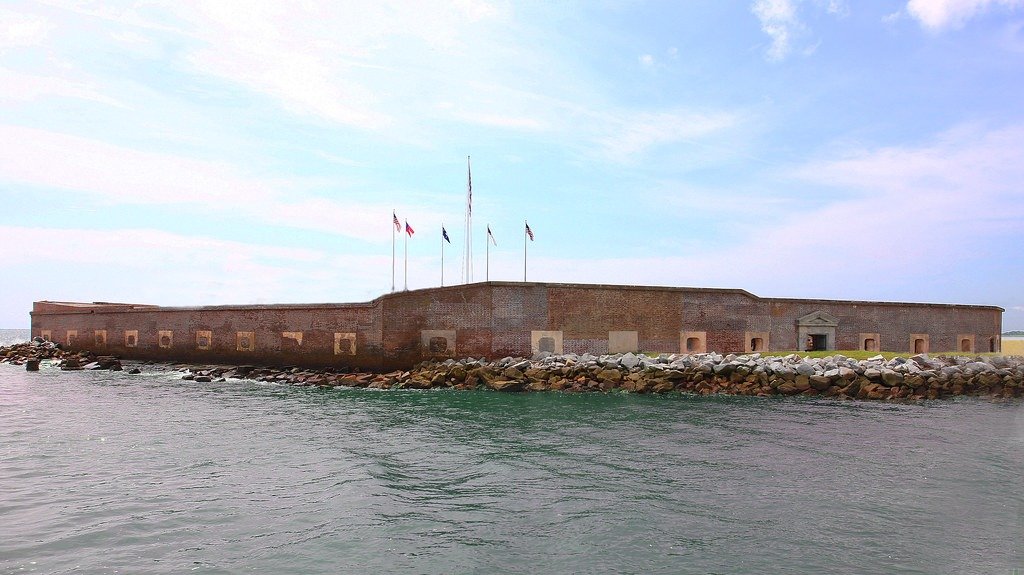
Fort Sumter, United States
Fort Sumter is one of the most recognizable examples of a coastal fort in American history.
Located in Charleston Harbor, South Carolina, it was built on an artificial island as part of the United States’ coastal defense system.
Construction began in 1829, and the fort became famous on April 12, 1861, when Confederate forces opened fire on the Union garrison.
The bombardment marked the beginning of the American Civil War.
Its thick masonry walls and artillery positions were designed to protect the harbor from naval attacks.
However, advances in artillery eventually exposed the weaknesses of traditional masonry fortifications.
Today, Fort Sumter is part of Fort Sumter and Fort Moultrie National Historical Park and can be visited by boat.
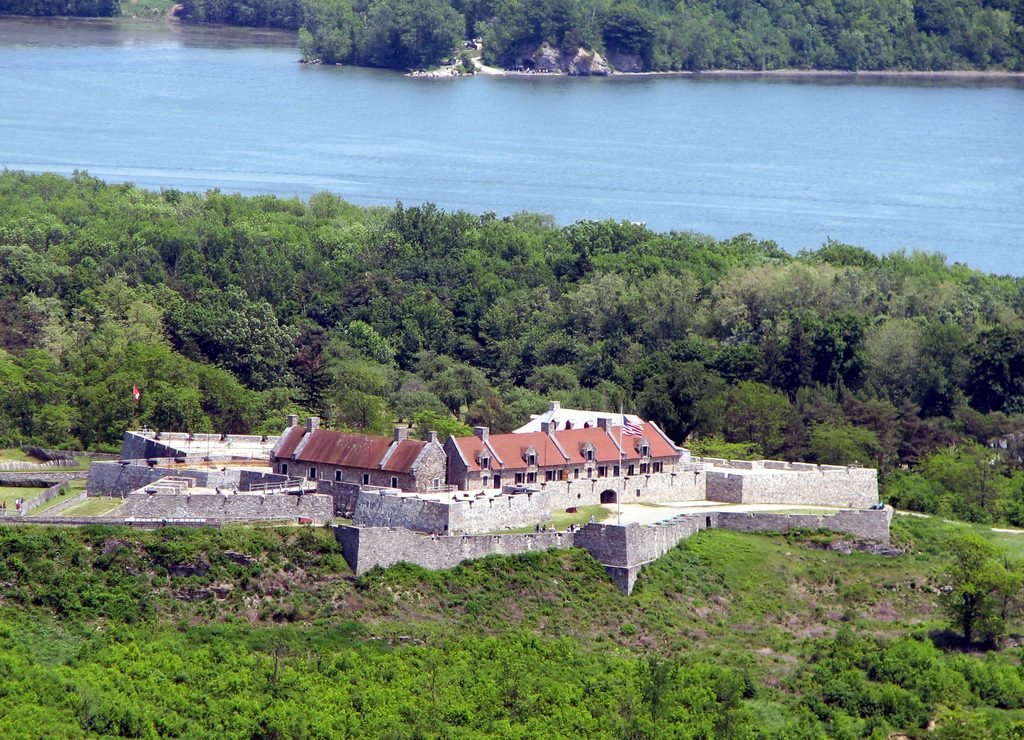
Fort Ticonderoga, United States
Located between Lake Champlain and Lake George in New York, Fort Ticonderoga played an important role in the French and Indian War and the American Revolutionary War.
The French built the fort in the 1750s to protect an important water route connecting Canada and the Hudson River Valley.
Its strategic location made it valuable to several military powers, and it changed hands during different conflicts.
Fort Ticonderoga is a good example of how a fort could control a specific geographical passage rather than defend an entire city or region.
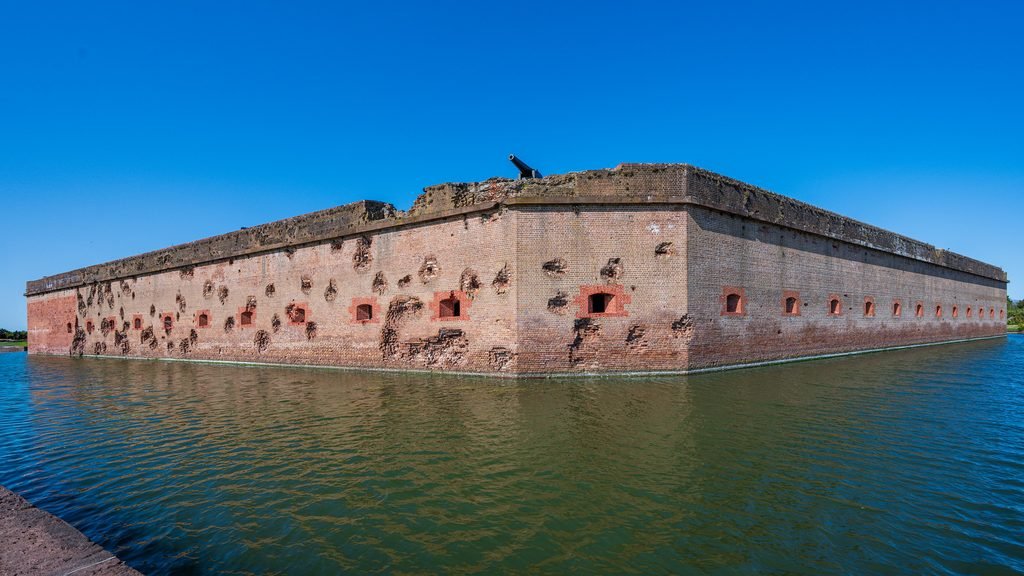
Fort Pulaski, United States
Located near Savannah, Georgia, Fort Pulaski was built to defend the entrance to the Savannah River.
Its construction began in 1829 and was completed in 1847.
The fort featured thick brick walls and was considered a strong example of nineteenth-century coastal military architecture.
However, during the American Civil War, Union forces used rifled artillery to bombard the fort in 1862.
The attack demonstrated how new weapons could make older defensive designs vulnerable.
Fort Pulaski is particularly interesting because it illustrates how quickly military technology could change the effectiveness of a fort.
What is a Fortress?
A fortress is a heavily fortified place designed to provide extensive protection against enemy attacks.
Unlike a fort, which commonly refers to an individual defensive structure, a fortress may consist of several interconnected fortifications, defensive walls, towers, gates, and military buildings.
Some fortresses were built to defend entire cities, important ports, mountain passes, or strategic territories.
Others were constructed around military bases or key geographical positions.
The size and complexity of a fortress depended on its purpose.
A fortress could include barracks, warehouses, ammunition storage, command buildings, defensive towers, and extensive walls designed to resist prolonged attacks.
Throughout history, fortresses were especially important before modern military technology made traditional defensive walls less effective.
Main Characteristics of a Fortress
Fortresses often had more extensive defensive systems than individual forts.
Their most common characteristics included:
- Extensive defensive systems: A fortress could contain several walls, towers, bastions, gates, and other defensive structures.
- Strategic importance: Fortresses were often built to protect important cities, harbors, trade routes, or military territories.
- Multiple defensive positions: Instead of relying on a single structure, a fortress could use several layers of protection.
- Military infrastructure: Larger fortresses often included barracks, storage facilities, workshops, command buildings, and spaces to support soldiers during a siege.
- Long-term defense: Many were designed to withstand prolonged attacks and support a military garrison over an extended period.
Not every fortress was enormous, and not every one contained a complete city.
The important distinction is its defensive role and the extent of its fortification system, rather than a specific measurement or architectural feature.
Famous Examples of Fortresses
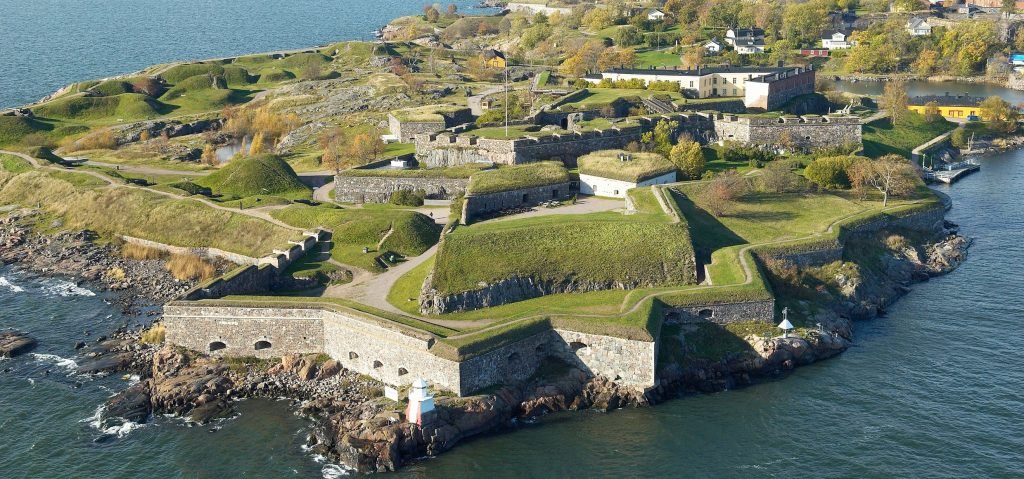
Suomenlinna, Finland
Located on a group of islands at the entrance to Helsinki’s harbor, Suomenlinna is one of Europe’s most interesting examples of a maritime fortress.
Construction began in 1748, when Finland was part of the Kingdom of Sweden.
The fortress was intended to strengthen Swedish defenses against Russia and serve as a naval base.
Rather than consisting of one isolated building, Suomenlinna developed into an extensive defensive complex spread across six islands.
Its fortifications included defensive walls, bastions, military buildings, barracks, and a dry dock.
The fortress later came under Russian control and eventually became part of independent Finland.
Today, Suomenlinna is a UNESCO World Heritage Site and one of Helsinki’s most popular attractions.
Rumeli Hisarı, Turkey
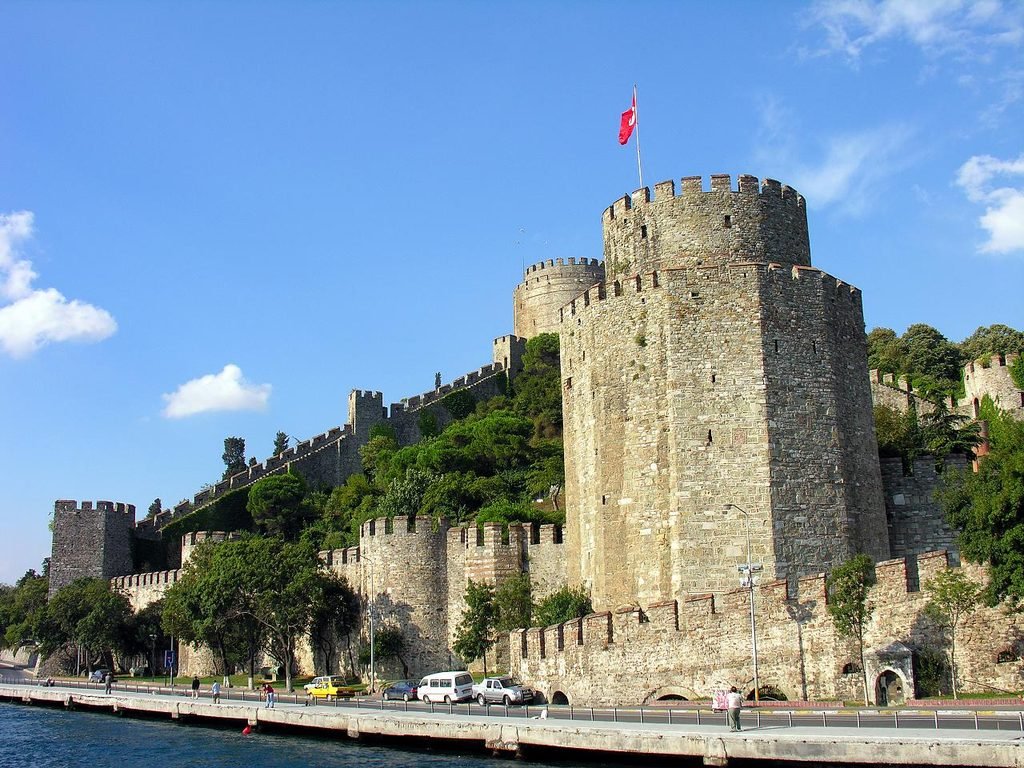
Rumeli Hisarı, also known as Rumeli Fortress, stands along the European shore of the Bosphorus in Istanbul.
It was built in 1452 by order of Ottoman Sultan Mehmed II, shortly before the conquest of Constantinople in 1453.
Its strategic location allowed the Ottomans to control maritime traffic through the Bosphorus and restrict supplies reaching the Byzantine capital.
The complex features massive walls and several towers arranged along the hillside.
Unlike a simple defensive outpost, its design was intended to control an important stretch of water and support a major military campaign.
Today, Rumeli Hisarı is one of Istanbul’s most impressive historic landmarks.
The Fortress of Louisbourg, Canada
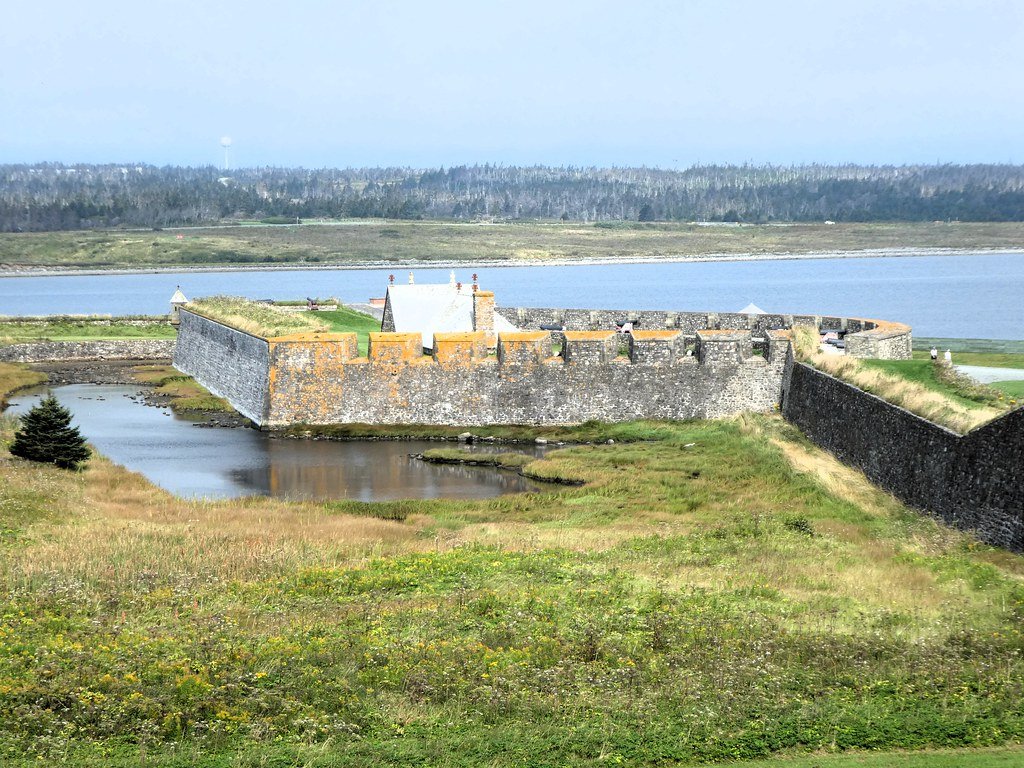
Located on Cape Breton Island in Nova Scotia, the Fortress of Louisbourg was an important French colonial stronghold during the eighteenth century.
The French began building the fortified town in 1719 to protect their interests in the region and secure access to important fishing grounds and Atlantic trade routes.
Louisbourg was much more than a single military building.
It included defensive walls, bastions, gates, military buildings, residences, and other structures that supported a functioning settlement.
The fortress was captured by British forces in 1745, returned to France, and captured again in 1758.
Today, Parks Canada preserves and interprets the historic site, offering visitors a glimpse of life in an eighteenth-century fortified town.
Fort vs. Fortress: What Are the Main Differences?
Now that we’ve looked at both structures individually, let’s compare their most common characteristics.
| Feature | Fort | Fortress |
|---|---|---|
| Main purpose | Defend a specific location | Provide extensive defense for a strategic area |
| Size | Often a single structure or installation | Often a larger fortified complex |
| Defensive system | May rely on one main defensive structure | May include several defensive layers and structures |
| Military role | Outpost, garrison, coastal defense, or strategic position | Major defensive stronghold or fortified area |
| Infrastructure | May include barracks and storage facilities | May include extensive military and support facilities |
| Examples | Fort Sumter, Fort Ticonderoga | Suomenlinna, Rumeli Hisarı |
The easiest way to remember the distinction is that a fort usually refers to an individual defensive installation, while a fortress often describes a more extensive fortified place or system.
However, these are general tendencies rather than universal rules.
Some forts were enormous, and some fortresses were relatively compact.
Historical terminology was not always consistent, so the name alone doesn’t tell the entire story.
Can a Fort Become a Fortress?
Yes! A fort can become part of a larger fortress system, especially when additional defensive structures are built around it.
Imagine a military fort protecting an important harbor.
Over time, the surrounding area becomes more strategically important, and military planners decide that a single fort is no longer enough.
They might build additional forts along the coastline, connect defensive positions, add artillery batteries, and construct walls or other barriers to protect the harbor.
Eventually, the entire defensive network may function as a fortress.
This is one reason why the terms can overlap.
A structure originally known as a fort might become part of a larger fortified complex, while the name it was given centuries earlier remains unchanged.
The American Civil War defenses of Washington, for example, demonstrate how several individual forts, batteries, trenches, and other defensive positions could work together as one extensive military system.
How Did Forts and Fortresses Change Over Time?
The history of forts and fortresses is closely connected to the development of weapons and military technology.
As armies developed more powerful weapons, defensive structures had to change to remain effective.
Ancient Fortifications
Some of the earliest defensive structures were built using earth, timber, and stone.
Ancient civilizations constructed fortified settlements, city walls, and military outposts to protect populations and control strategic territory.
The ancient world offers many examples of large defensive systems, from the fortified cities of Mesopotamia to the walls surrounding important Mediterranean settlements.
At this stage, defensive structures often focused on protecting communities from raids, invasions, and attacks involving infantry, bows, and early siege equipment.
Medieval Forts and Fortresses
During the Middle Ages, stone fortifications became increasingly sophisticated in many parts of Europe, the Middle East, and Asia.
Thick walls, towers, fortified gates, and elevated defensive positions helped defenders resist attacks.
Some fortifications protected individual military positions, while others surrounded entire towns and cities.
Sieges were a major part of medieval warfare.
Attackers used equipment such as battering rams, siege towers, and trebuchets to break through walls or force defenders to surrender.
The design of fortifications often reflected the military technology available at the time.
The Age of Gunpowder and Artillery
The development of gunpowder weapons changed the way military engineers designed defensive structures.
Traditional high stone walls became increasingly vulnerable to cannon fire.
In response, fortifications began to feature lower, thicker walls, angled defensive positions, and bastions designed to improve artillery coverage.
The star-shaped fort became a recognizable feature of early modern military architecture, particularly in Europe.
These designs helped defenders protect the walls from different angles and reduced the risk of attackers finding sheltered positions close to the fortifications.
Modern Military Fortifications
By the nineteenth and twentieth centuries, improvements in artillery, explosives, aircraft, and later missiles made many traditional forts and fortresses less effective.
Military strategy gradually shifted toward more dispersed defensive positions, reinforced bunkers, underground installations, coastal batteries, and other specialized structures.
Some historic forts continued to serve military purposes, while others became obsolete and were eventually abandoned or transformed into museums and heritage sites.
Today, many surviving forts and fortresses are protected as historic landmarks, offering valuable insight into the evolution of military architecture and warfare.
Frequently Asked Questions
Is a fortress bigger than a fort?
Generally, yes. A fortress often refers to a larger or more extensive defensive complex, while a fort usually describes an individual military installation. However, there are exceptions, and the terms have sometimes been used interchangeably.
What is the main purpose of a fort?
A fort is built to defend a specific strategic location. It might protect a harbor, border, military outpost, river crossing, or important transportation route.
Can a fortress contain several forts?
Yes. A fortress or larger defensive system can include several individual forts, batteries, walls, and other military structures working together to protect an area.
Are all museums in Paris closed on Mondays?
Not at all! While several popular museums close on Mondays, many others remain open. The Louvre, Musée de l’Orangerie, Musée de l’Armée, and Musée Jacquemart-André are just a few examples.
Are castles and fortresses the same thing?
Not exactly. A castle is generally a fortified residence associated with a ruler, noble family, or military authority, especially during the medieval period. A fortress is a broader term for a heavily fortified place or defensive complex.
Some castles functioned as fortresses, but not every fortress was a castle.
If you’re curious about the distinction, take a look at our guide to the difference between a castle, a palace, and a château.
Are forts still used today?
Yes, although their role has changed considerably. Some military installations still use the word fort in their names, but traditional forts and fortresses are no longer the central elements of national defense that they once were.
Many historic examples are now museums, archaeological sites, or protected heritage landmarks.
Final Thoughts
Forts and fortresses played an important role in shaping military history.
From ancient defensive settlements to elaborate European fortification systems, these structures helped protect cities, control trade routes, and defend strategic territories.
Although the terms are closely related, a fort generally refers to an individual defensive structure, while a fortress often describes a larger fortified place or system.
The next time you visit a historic fort or fortress, take a moment to look beyond its walls.
Its location, architecture, and defensive features can tell you a lot about the people who built it, the threats they faced, and the military technology of their time.
And if you enjoy exploring the history of castles and other historic buildings, you might also like our guide to the difference between a castle, a palace, and a château.
More On Architecture
This text was originally written and posted in December 2024 and updated in November 2026. New information has been added, and links have been updated so that it could offer a better experience to the reader.


