12 Best Beaches to Visit in Italy
Italy might be known for its art-filled cities, Renaissance masterpieces, and delicious pasta, but when summer hits, the country’s coastline steals the spotlight.
Thanks to Italy’s diverse landscape, it has a lot to offer to all kinds of tourists, from the crystal-clear waters of Sardinia to the volcanic shores of Sicily and the stunning cliffs of the Amalfi Coast.
Whether you’re chasing turquoise seas, white sand, or postcard views, here are 12 of the best beaches in Italy that deserve a spot on your travel list.
Disclosure: This post does contain affiliate links that I earn a small commission for at no extra cost to you. Any purchases you make through my links help keep the site running. Thanks in advance for your support!
1. Spiaggia dei Conigli (Lampedusa, Sicily)
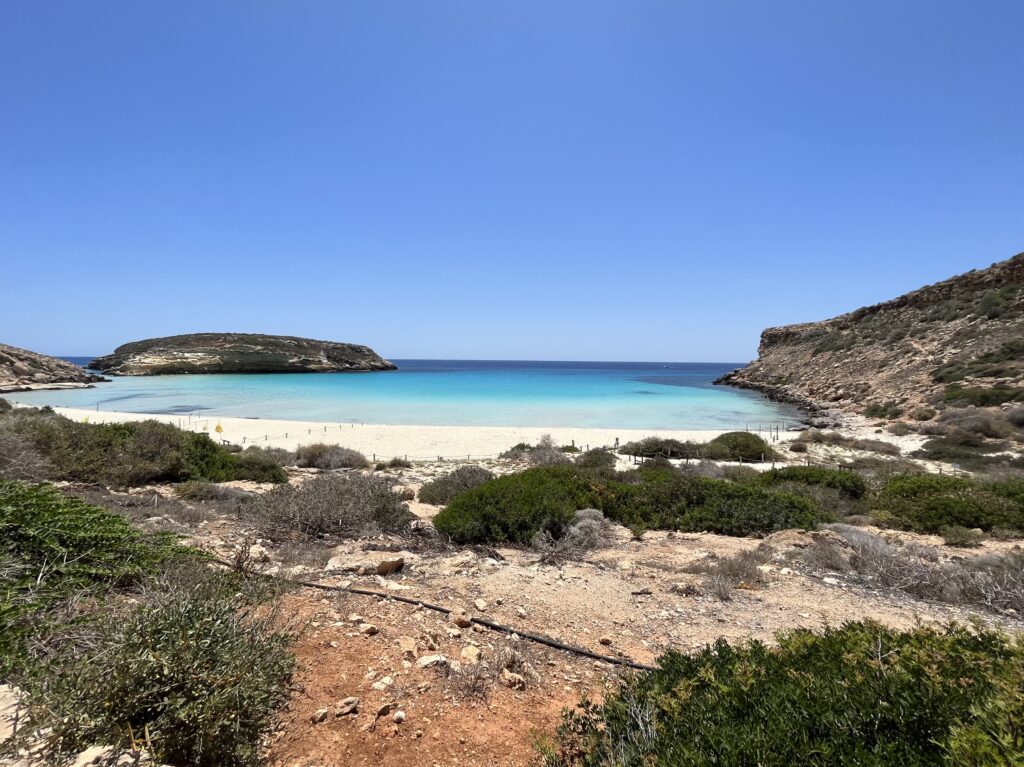
Often ranked among the most beautiful beaches in the world, Spiaggia dei Conigli, or Rabbit Beach, is pure paradise.
Located on the tiny island of Lampedusa, closer to Africa than mainland Italy, this beach is famous for its shimmering turquoise waters and powdery white sand.
The area is part of a protected nature reserve, which keeps it pristine and perfect for swimming, snorkeling, or simply soaking up the sun.
You can reach Lampedusa by plane from Palermo or Catania, or by ferry from Porto Empedocle.
From the main town, Spiaggia dei Conigli is just a short drive away, followed by a scenic walk down to the beach.
It’s a favorite for couples and nature lovers looking for a peaceful, untouched escape.
2. Cala Goloritzé (Sardinia)
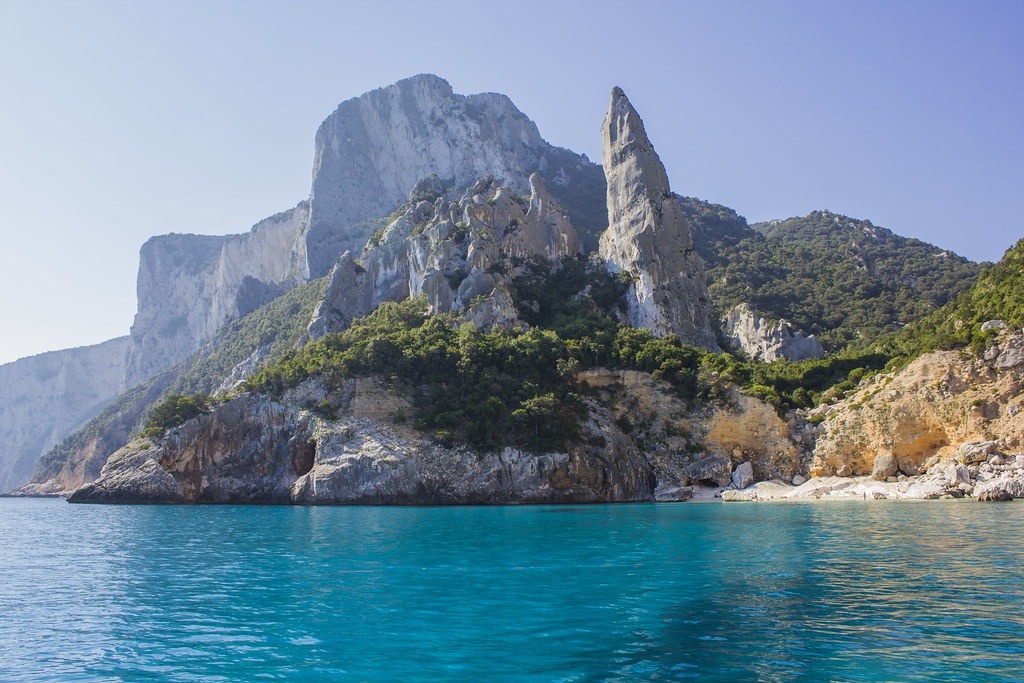
Cala Goloritzé isn’t just a beach, it’s a UNESCO-protected natural monument.
Nestled at the base of towering limestone cliffs on Sardinia’s Gulf of Orosei, this small cove is known for its electric-blue water and striking rock formations, including the famous 148-meter-high pinnacle of Monte Caroddi.
Reaching Cala Goloritzé is an adventure: you can hike down from the Su Golgo plateau (a 1.5-hour trek each way) or arrive by boat from nearby Cala Gonone.
The hike makes it less crowded and ideal for travelers who love nature and photography.
Pack your snorkeling gear, the underwater world here is just as beautiful as the scenery above.
3. Baia dei Turchi (Puglia)
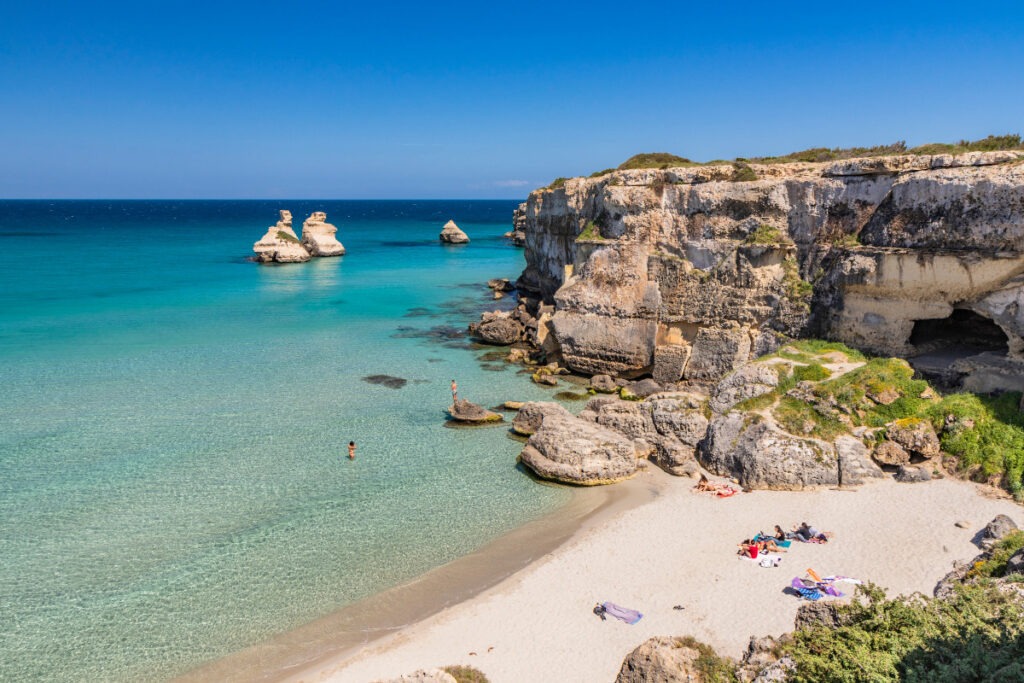
Located near Otranto in southern Puglia, Baia dei Turchi, “Bay of the Turks, offers a mix of history and natural beauty.
Legend says this was where Turkish warriors landed during the 15th-century siege of Otranto.
Today, the beach is a peaceful stretch of fine white sand backed by pine forests and surrounded by the Adriatic’s sparkling blue waters.
It’s easily accessible by car or bike from Otranto, and perfect for families, couples, or solo travelers looking for calm waters and a relaxing atmosphere.
You’ll find beach clubs and free areas side by side, plus a few kiosks selling cold drinks, a true southern Italian summer vibe.
4. Tropea Beach (Calabria)
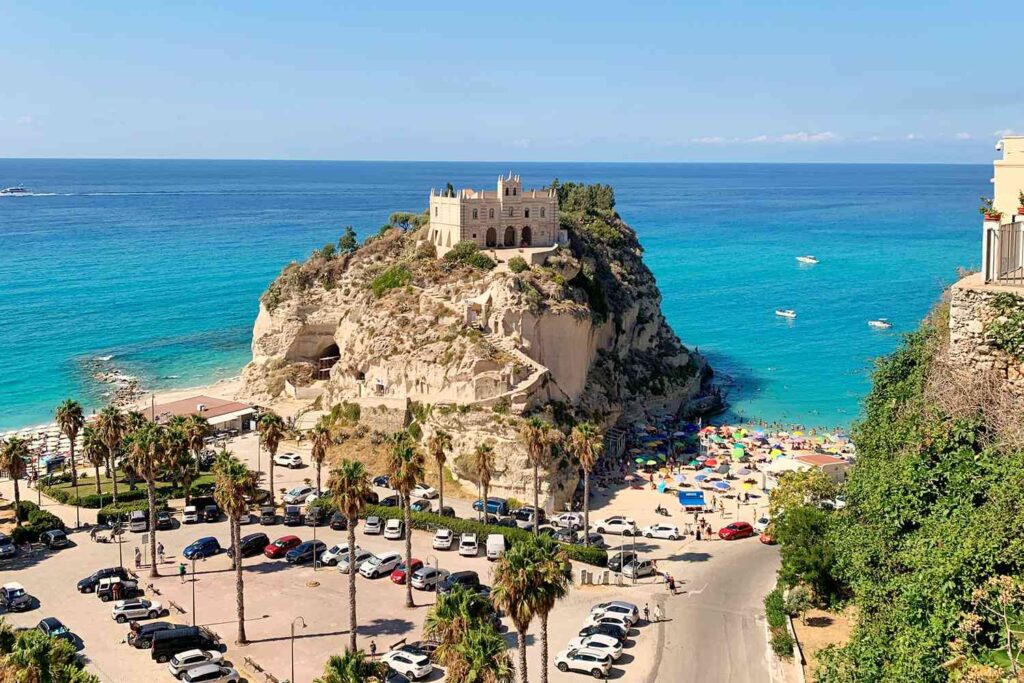
Calabria’s Tropea Beach looks like something straight out of a postcard.
Tucked beneath the cliffs of the charming town of Tropea, this beach offers golden sand, dramatic views of the Santa Maria dell’Isola monastery perched above, and water so clear it feels unreal.
The beach is easy to reach; you just walk down from the historic center through narrow alleyways that suddenly open to panoramic views.
Tropea is perfect for travelers who want a bit of everything: beach time, good food, and postcard-worthy sunsets.
Don’t leave without trying the town’s famous red onion gelato, yes, it exists!
5. Spiaggia di Sansone (Elba Island, Tuscany)
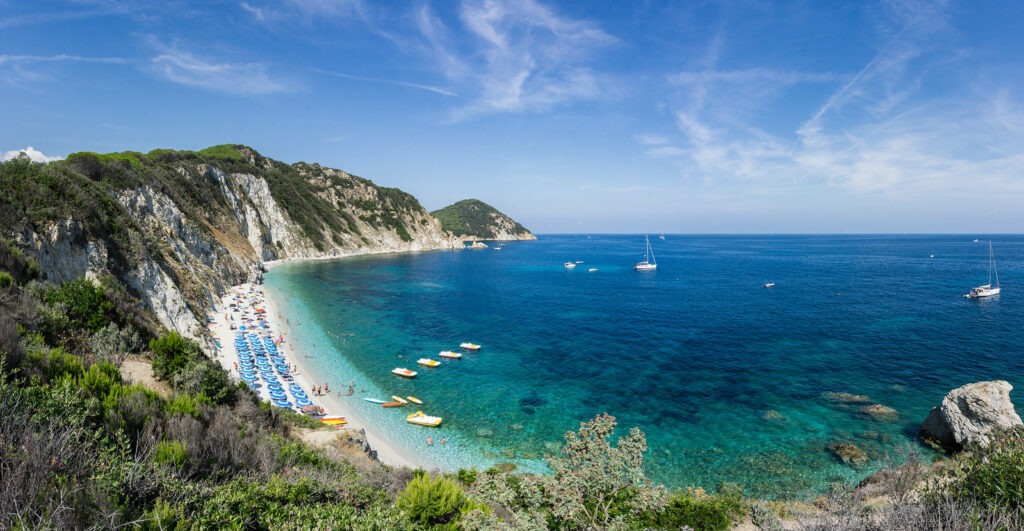
Elba Island is famous for its connection to Napoleon, but Spiaggia di Sansone shows there’s much more to love here.
The beach, with its dazzling white pebbles and crystal-clear water, feels almost Caribbean.
The contrast of the white rocks with the turquoise sea makes it a favorite spot for photographers and swimmers alike.
You can reach Elba by ferry from Piombino, then drive to the beach near Portoferraio.
A short downhill path leads you to Sansone.
It’s ideal for snorkeling, as the transparent water reveals colorful fish and underwater caves.
Come early, it’s small and fills up quickly on summer days.
6. Marina Piccola (Capri, Campania)
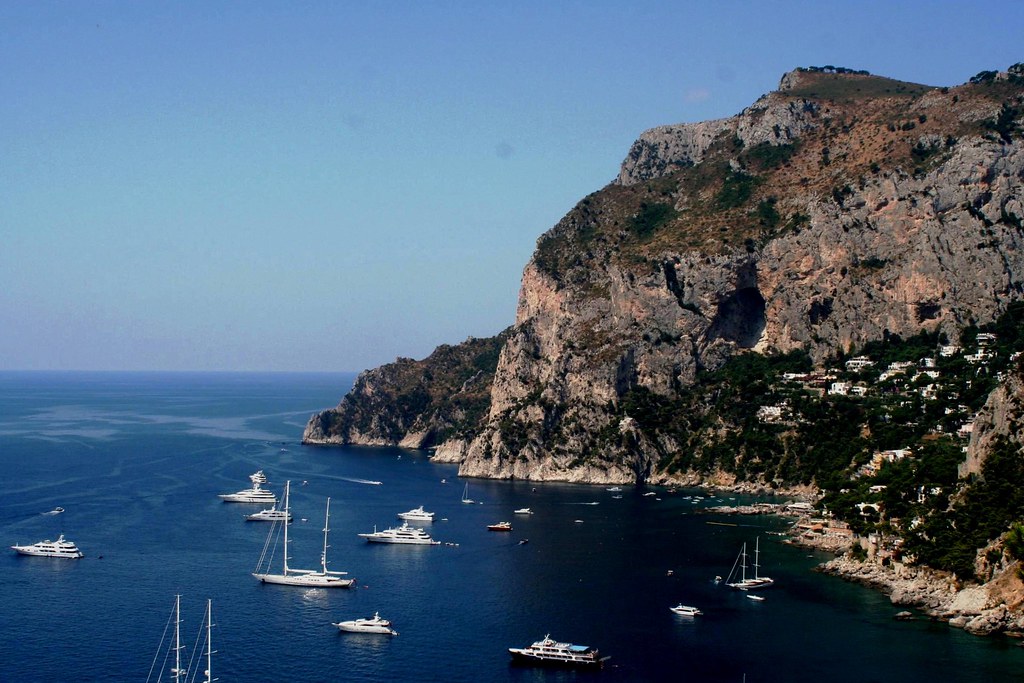
Capri’s Marina Piccola is glamorous, chic, and perfectly positioned for a swim with a view.
Set on the southern side of the island, it offers postcard sights of the Faraglioni rock formations, some of the most iconic in Italy.
The water here is deep blue, the vibe sophisticated, and the crowd often includes stylish locals and international visitors.
To get there, take a bus or taxi from Capri town or walk down the Via Krupp for a scenic (and steep!) descent.
It’s perfect for couples, luxury travelers, or anyone looking to experience the classic Mediterranean dolce vita.
Nearby beach clubs offer sunbeds, cocktails, and fresh seafood lunches right by the water.
7. Cala Rossa (Favignana, Sicily)
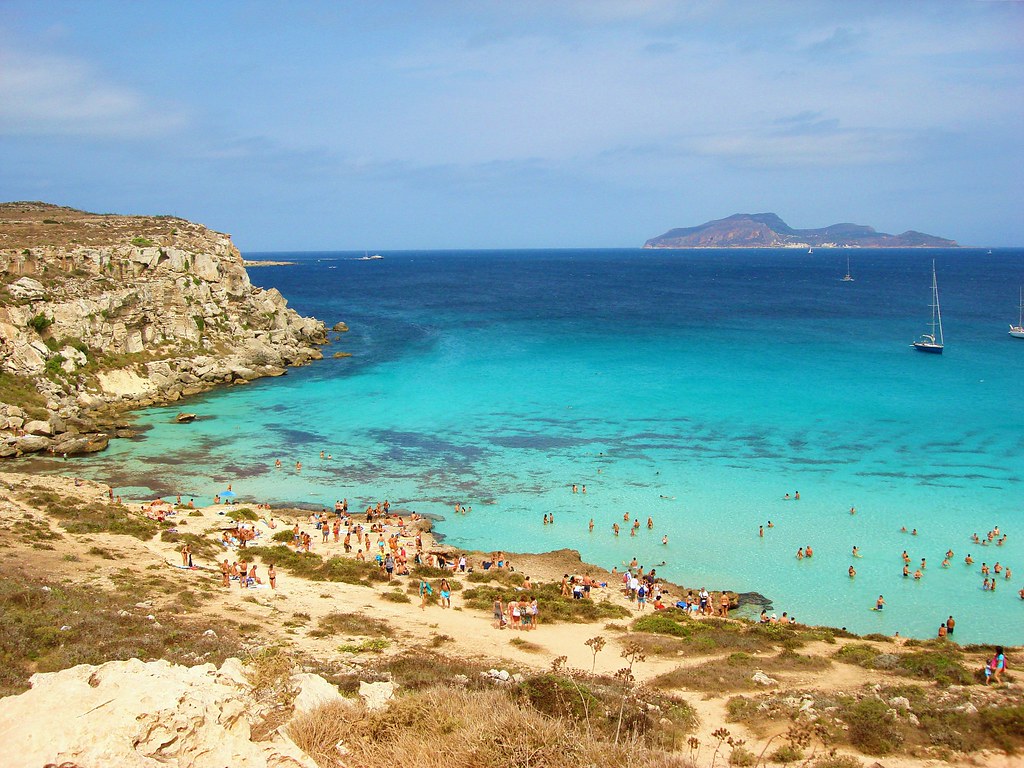
Cala Rossa, on the island of Favignana in the Egadi archipelago, is a wild beauty.
With its rocky coastline, clear turquoise waters, and dramatic cliffs, it’s one of the most photogenic spots in Sicily.
The beach got its name, “Red Cove, from the red hue the rocks supposedly took after an ancient battle.
Favignana can be reached by ferry from Trapani, and Cala Rossa is easily accessible by bike or scooter from the port.
There are no facilities here, so bring your own drinks and snacks. It’s ideal for adventurers and snorkelers who love rugged, natural landscapes and quiet corners away from the crowds.
8. La Pelosa Beach (Sardinia)
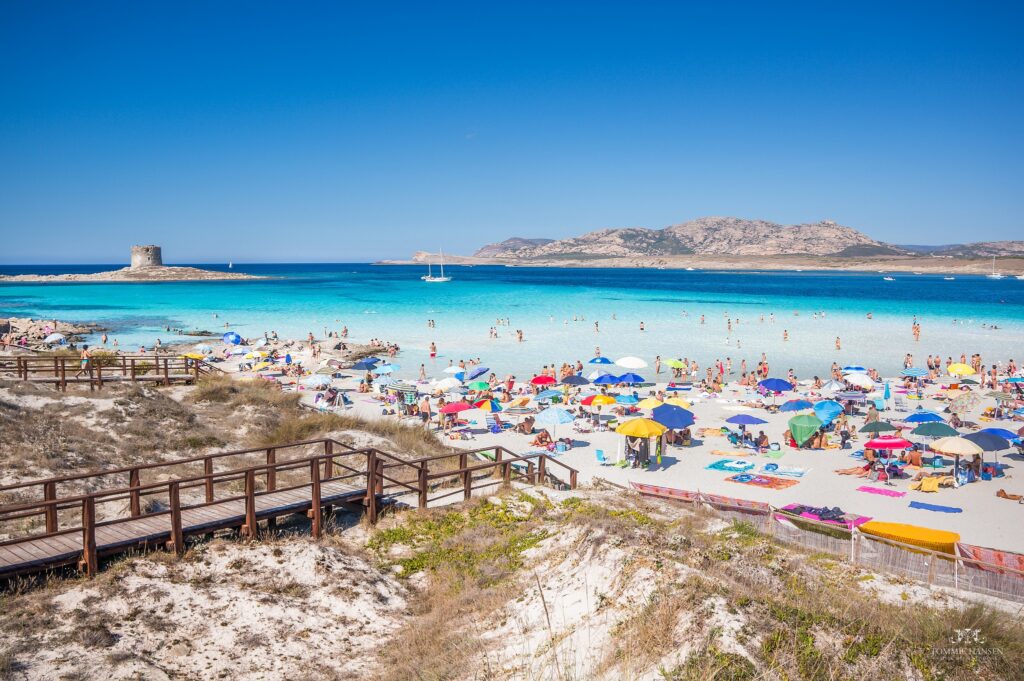
La Pelosa, near Stintino in northern Sardinia, is famous for its impossibly white sand and shallow turquoise water that looks like a tropical lagoon.
The beach faces the tiny Asinara Island and the 16th-century Torre della Pelosa, adding a touch of history to the incredible view.
It’s easily reached by car from Alghero or Sassari, and because of its popularity, visitors need to book a spot in advance during high season (a recent rule to protect the ecosystem).
It’s a great beach for families, thanks to the calm, shallow sea, and ideal for anyone who loves swimming in crystal-clear waters that look airbrushed.
9. Spiaggia di Fegina (Monterosso al Mare, Cinque Terre)
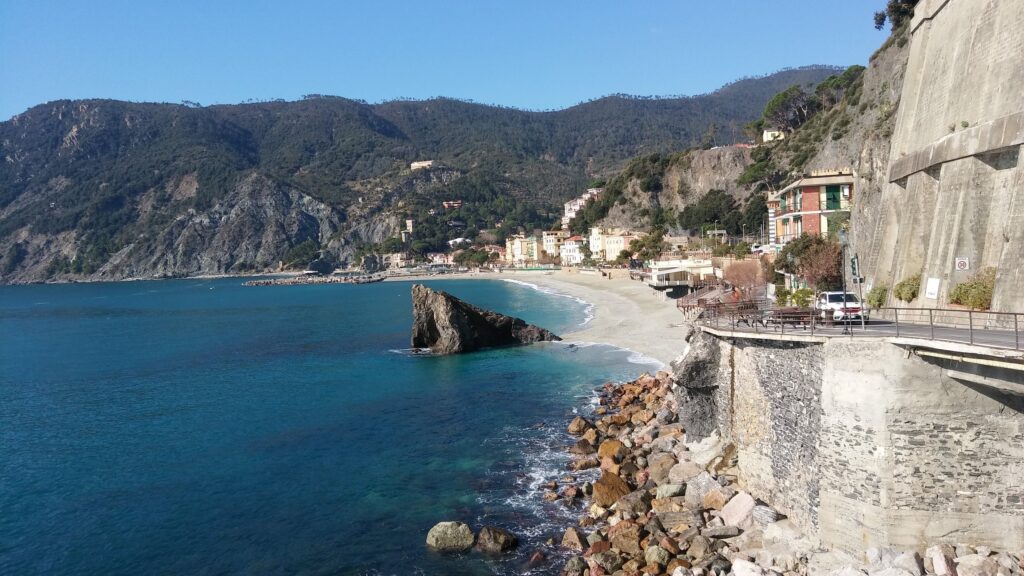
Among the five villages of Cinque Terre, Monterosso al Mare stands out for having the area’s largest sandy beach, Spiaggia di Fegina.
Backed by colorful houses and dramatic cliffs, it’s the perfect place to relax after hiking the famous coastal trails.
You can reach Monterosso easily by train from La Spezia or Genoa.
The beach has both free and private sections, plus restaurants and cafés within steps of the sand.
The water is calm and clear, making it perfect for swimming.
It’s the best option for travelers who want to mix beach time with the postcard charm of Cinque Terre.
10. Cala Mariolu (Sardinia)
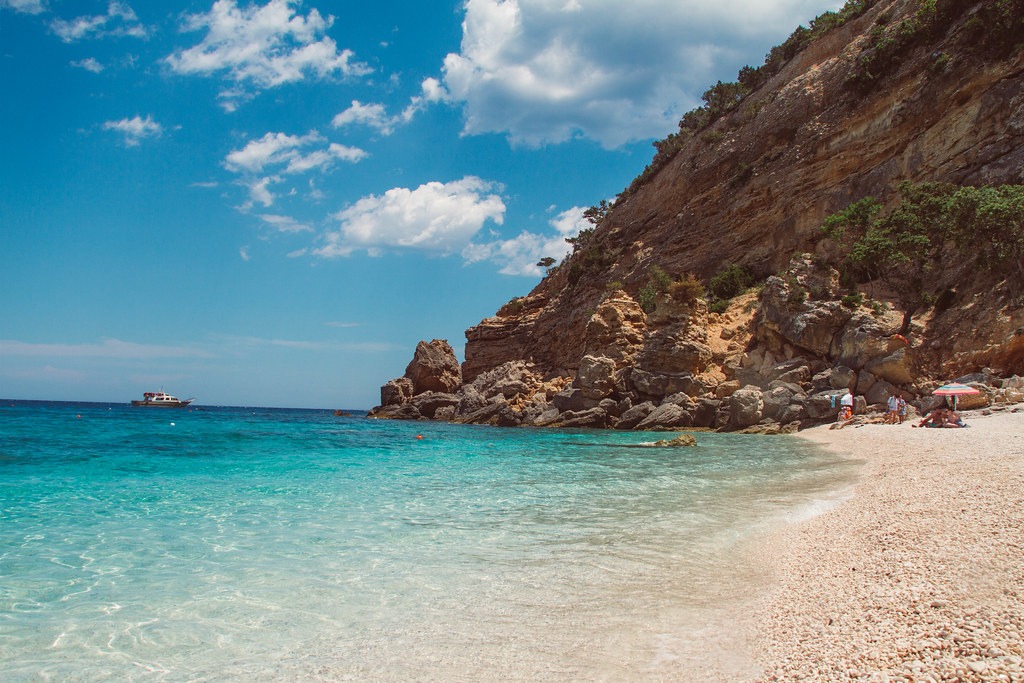
Cala Mariolu, also located in the Gulf of Orosei, is often called one of Sardinia’s most breathtaking beaches, and for good reason.
Its shoreline is made of tiny, white, round pebbles that feel soft under your feet, and the water changes color from turquoise to deep blue as it meets the cliffs.
Reaching Cala Mariolu requires either a boat trip from Cala Gonone or Arbatax or a challenging hike, but the reward is worth every step.
The cove is surrounded by towering rocks, perfect for snorkeling, cliff jumping, or simply floating in one of the clearest seas in the Mediterranean.
It’s a paradise for nature lovers and adventurers.
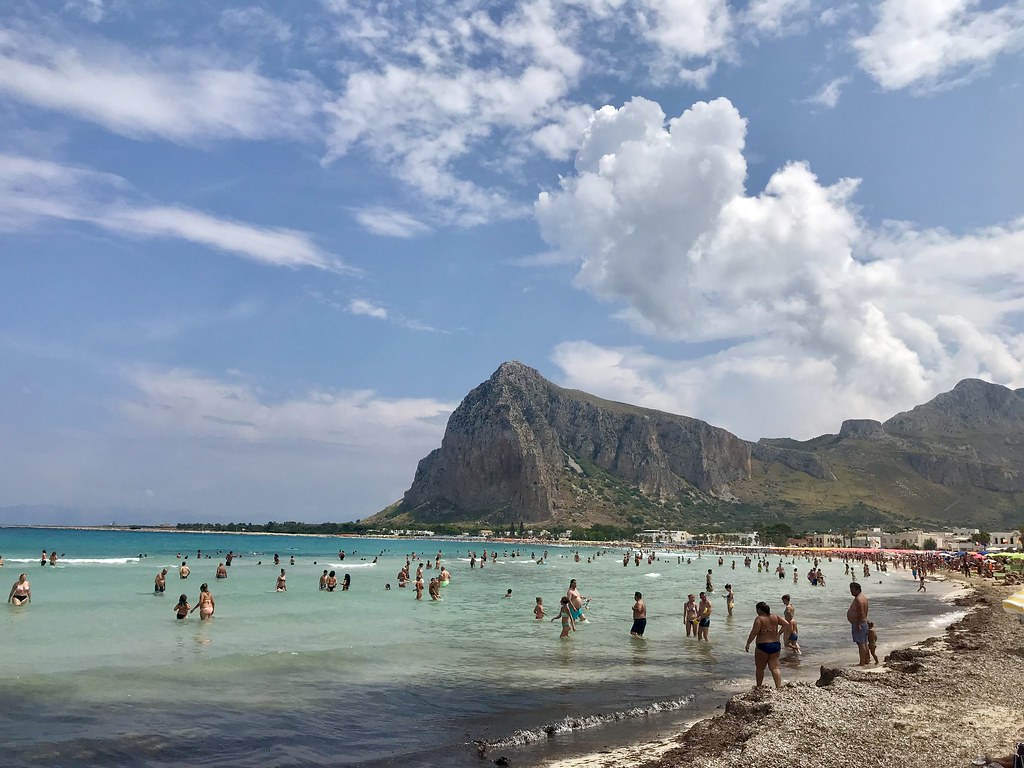
11. San Vito Lo Capo (Sicily)
San Vito Lo Capo is Sicily’s answer to a Caribbean escape, a long, sandy beach framed by Mount Monaco’s rugged cliffs and bathed in turquoise water.
The town itself has a relaxed, bohemian feel, with whitewashed houses, palm trees, and seafood restaurants serving the best couscous in Italy (a local specialty).
The beach is family-friendly, easy to access, and lined with both public and private areas.
You can drive there from Palermo or Trapani in about two hours. It’s ideal for sunseekers, families, and anyone who loves a laid-back seaside town with great food and incredible sunsets.
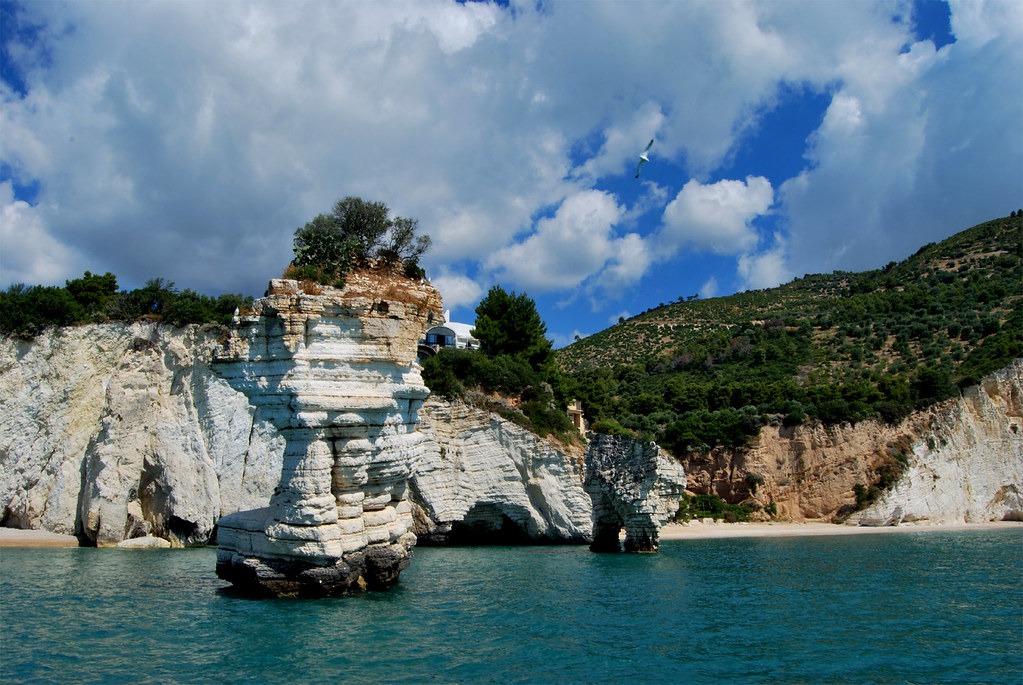
12. Baia delle Zagare (Gargano, Puglia)
Hidden along Puglia’s Gargano Peninsula, Baia delle Zagare is a stunning cove famous for its white limestone cliffs and sea stacks that rise dramatically from the turquoise water.
The name means “Bay of the Orange Blossoms,” inspired by the scent of citrus trees that fill the air in spring.
Access to the beach is limited to protect its beauty; you can reach it via a private elevator from nearby hotels or by boat tours departing from Vieste or Mattinata.
It’s a perfect spot for couples and travelers seeking peace, natural beauty, and a hint of exclusivity.
Bring your camera: every angle looks like a postcard.
Tips for Planning Your Italian Beach Getaway
- Best time to go: Late May to early October offers warm weather and swimmable seas. July and August are the busiest months — visit in June or September for fewer crowds.
- Getting around: Some beaches are easily accessible by car or train, while others require a boat or a hike. Renting a car gives you more flexibility, especially in Sardinia and Sicily.
- What to pack: Bring reef-safe sunscreen, water shoes (some beaches are pebbly), and a hat. Many remote beaches have no facilities, so carry water and snacks.
- Stay local: Spend a few days near your favorite beach to experience the surrounding villages, local cuisine, and laid-back Italian summer vibes.
Final Thoughts
From Sardinia’s turquoise coves to Sicily’s volcanic shores and Puglia’s hidden bays, Italy’s beaches offer a perfect mix of natural beauty, history, and Mediterranean charm.
Whether you’re after adventure, romance, or pure relaxation, these 12 beaches show why Italy isn’t just a destination for art lovers, it’s also one of Europe’s most magical seaside escapes.
FAQ: Planning Your Italian Beach Vacation
Which Italian beach has the clearest water?
If you’re chasing that Caribbean-style turquoise, head to La Pelosa Beach in Sardinia or Spiaggia dei Conigli in Lampedusa. Both are known for their crystal-clear, shallow waters that shimmer under the sun. Cala Mariolu and Cala Goloritzé (also in Sardinia) are close contenders; the visibility underwater is incredible, making them ideal for snorkeling and photography.
What’s the best Italian island for beaches?
That’s a tough one, but Sardinia takes the crown for variety and water quality. Its coastline is packed with jaw-dropping beaches, from the wild coves of the Gulf of Orosei to the soft white sands of Stintino and Costa Smeralda. Sicily comes next, offering volcanic scenery, ancient ruins nearby, and vibrant coastal towns like San Vito Lo Capo and Favignana. If you prefer a mix of history and seaside relaxation, both islands are unbeatable.
Can you swim at the beaches in Cinque Terre?
Yes! While most of the Cinque Terre coastline is rocky, Monterosso al Mare stands out with its large sandy beach, Spiaggia di Fegina. It’s the only true beach in the area where you can comfortably swim, sunbathe, or rent a lounger. The water is calm and clear, and the views of the colorful cliffside houses are postcard-perfect. Other villages have small rocky coves, good for a quick dip after hiking.
When is the best time to visit the beaches in Italy?
The best months are June and September; the weather is warm, the sea is perfect for swimming, and the crowds are manageable. July and August are peak summer months when Italians go on holiday, meaning beaches can get packed and prices rise. If you’re planning to visit famous spots like Capri, La Pelosa, or Cinque Terre, early mornings and weekdays are your best bet for quieter moments.
When is the best time to visit the beaches in Italy?
The best months are June and September; the weather is warm, the sea is perfect for swimming, and the crowds are manageable. July and August are peak summer months when Italians go on holiday, meaning beaches can get packed and prices rise. If you’re planning to visit famous spots like Capri, La Pelosa, or Cinque Terre, early mornings and weekdays are your best bet for quieter moments.
Which Italian beach is the least crowded?
If you want to escape the crowds, look for beaches that require a bit of effort to reach, like Cala Goloritzé or Cala Mariolu in Sardinia, which involve a hike or boat trip. Cala Rossa on Favignana Island and Baia delle Zagare in Puglia are also quieter due to limited access. Go early in the morning or during shoulder season (May, June, September) for the best experience.
More About Summer Destinations in Italy
- Best Beaches to Visit Near Rome
- Best Day Trips from Naples, Italy
- One Day in Naples: Best of Naples in 24 hours
- 2 Days in Naples Itinerary for First-Timers
- One Day in Procida: What to Do on a Day Trip
Italy Travel Essentials
- FLIGHT TICKET: Get the best flight deal with Skyscanner.
- ACCOMMODATION: Find the perfect accommodation on Booking.
- VISA: Apply for a Visa on iVisa.
- eSIM: Stay connected throughout your trip with Airalo eSim. It offers packages from 7 to 30 days for accessible prices.
- PRIVATE TRANSFER: Book your private airport transfer.
- RENT A CAR: Find the best rates on DiscoverCars.
- GUIDED TOUR: Find the best tours in Italy on GetYourGuide