12 Best Romanesque Cathedrals in Europe
Romanesque cathedrals don’t shout for attention; they command it quietly.
Built with thick stone walls, rounded arches, and a strong sense of order, these churches were designed to last, to protect, and to inspire awe in a medieval world full of uncertainty.
Long before Gothic cathedrals reached for the sky, Romanesque architecture grounded faith firmly in stone.
Spread across Europe, Romanesque churches reflect a time when pilgrimage, religion, and power were deeply connected.
Many of these buildings are nearly a thousand years old, yet stepping inside them still feels timeless.
If you love architecture, history, or simply visiting places with soul, these are 12 of the best Romanesque cathedrals and churches to visit in Europe.
Disclosure: This post does contain affiliate links through which I earn a small commission at no extra cost to you. Any purchases you make through my links help keep the site running. Thanks in advance for your support!
Romanesque Architecture
Romanesque architecture developed across Europe roughly between the 10th and early 12th centuries, just before the rise of Gothic architecture.
The name “Romanesque” comes from its strong inspiration from ancient Roman building techniques, especially the use of rounded arches and stone vaulting.
Romanesque cathedrals were built in a period when stability mattered.
Europe was fragmented, travel was difficult, and the Church was one of the few unifying institutions.
As a result, these buildings were meant to feel safe, solid, and eternal.
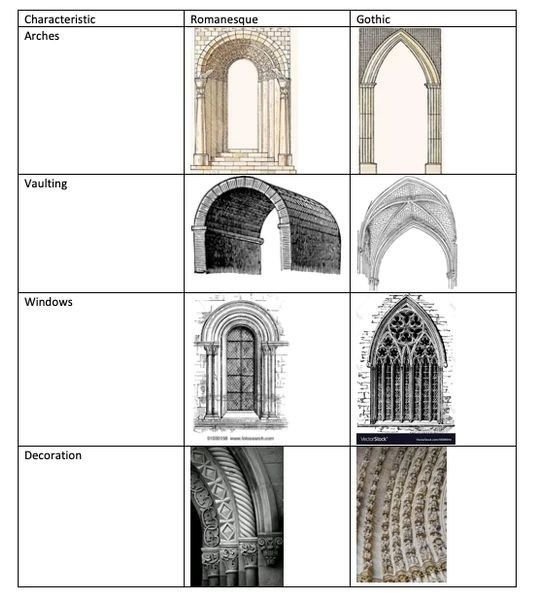
Main Features of Romanesque Architecture:
- Rounded arches (never pointed)
- Barrel vaults and groin vaults
- Thick stone walls
- Small windows, creating dim interiors
- Massive columns and piers
- Sculpted capitals and portals with biblical scenes
- Heavy, fortress-like appearance
Many Romanesque churches were built along pilgrimage routes, especially the Camino de Santiago, and their layouts were designed to handle large flows of pilgrims moving through the space.
Here are some comparisons between Romanesque and Gothic architecture to make it clearer:
Best Romanesque Cathedrals in Europe
1. Santiago de Compostela Cathedral – Spain
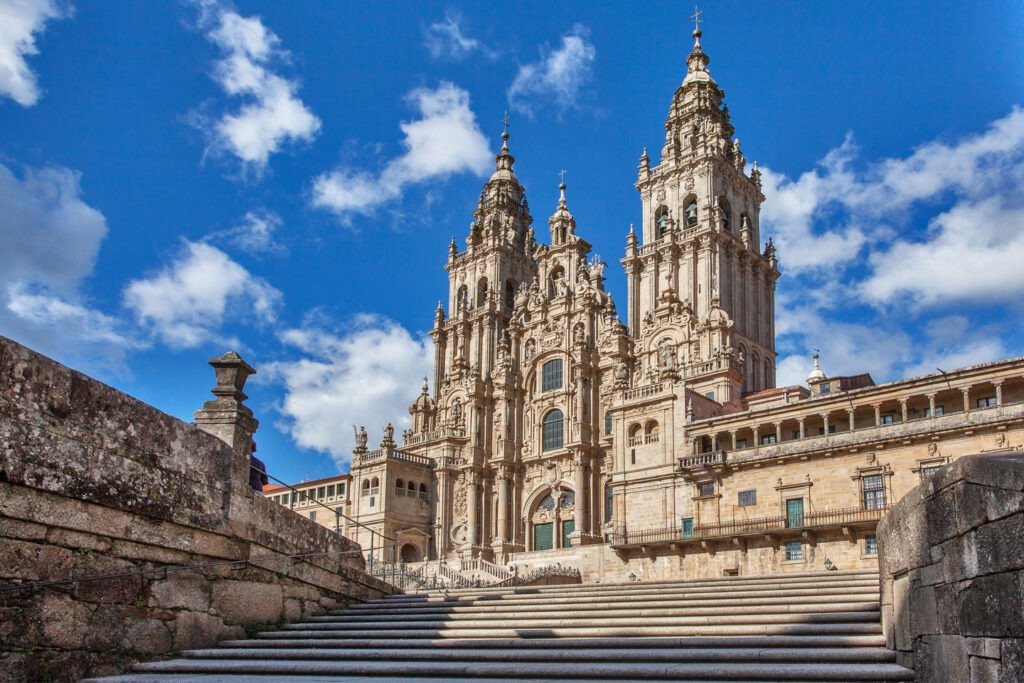
Santiago de Compostela Cathedral is one of the most important Romanesque buildings in Europe and the final destination of the Camino de Santiago, one of the most famous pilgrimages in the world.
Construction began in the late 11th century, and the cathedral was designed specifically to welcome thousands of pilgrims arriving daily from across medieval Europe.
While the exterior was later transformed with Baroque additions, the interior remains deeply Romanesque.
The massive nave, thick columns, and especially the Pórtico da Gloria, sculpted by Master Mateo, are among the greatest achievements of Romanesque art.
The portal’s expressive figures and symbolic carvings tell biblical stories with remarkable emotion and detail.
2. Speyer Cathedral – Germany
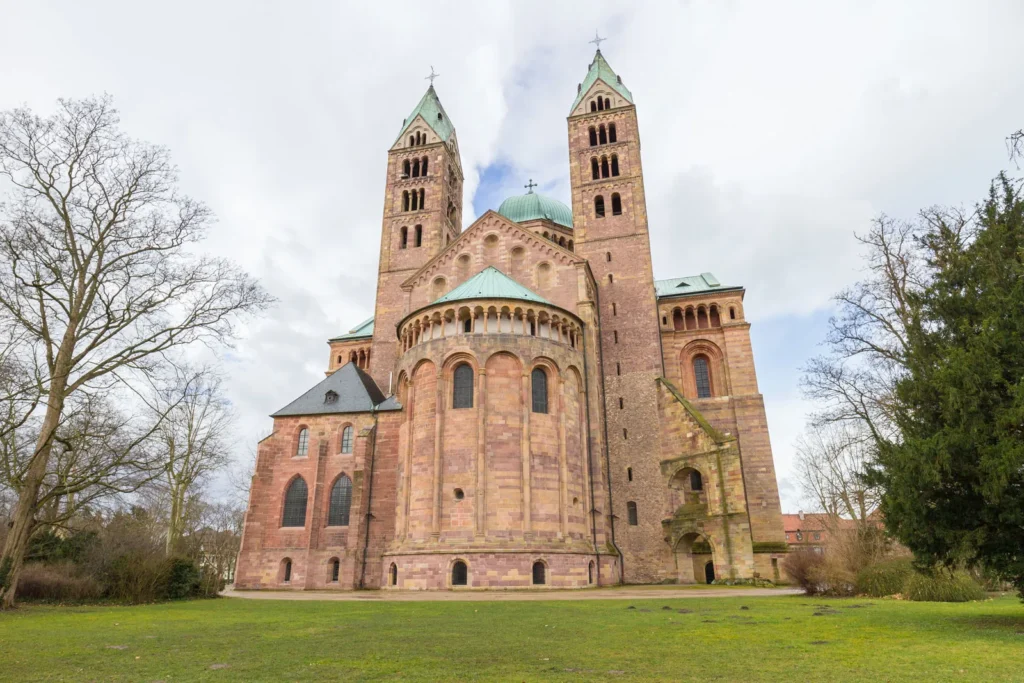
Speyer Cathedral is often described as the largest Romanesque cathedral in Europe.
Built in the 11th century by the Salian emperors, it was intended to project imperial power as much as religious devotion.
Its immense scale, repetitive arches, and enormous crypt, the largest Romanesque crypt in Europe, create a sense of overwhelming solidity.
Several Holy Roman Emperors are buried here, reinforcing the cathedral’s political significance.
Speyer represents Romanesque architecture at its most monumental: heavy, rhythmic, and unapologetically powerful.
3. Durham Cathedral – England
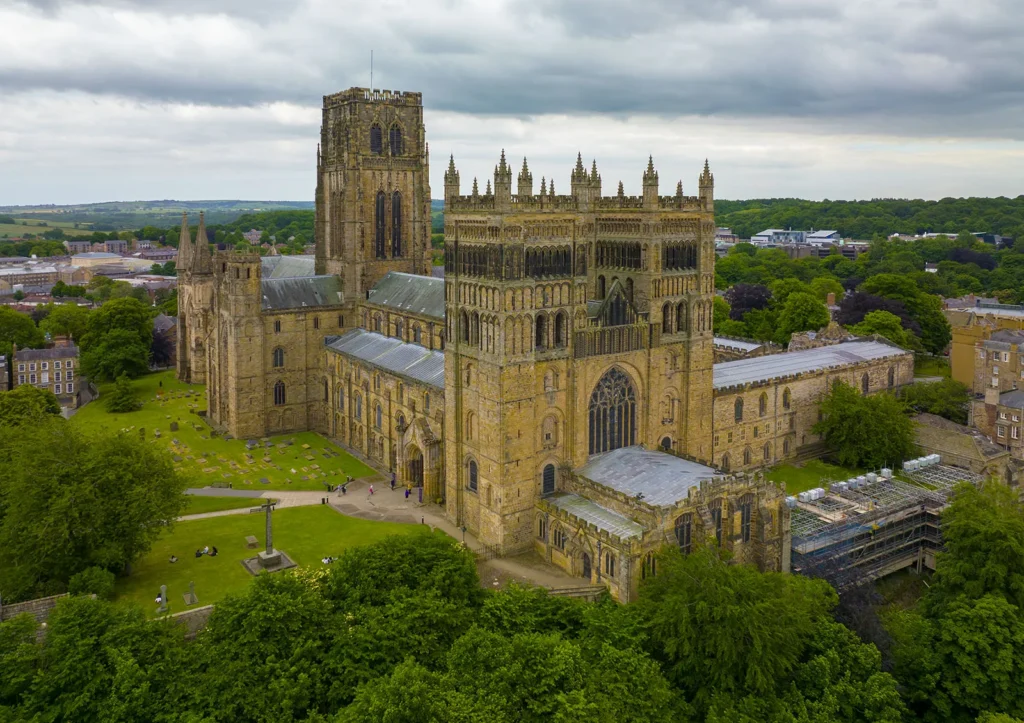
Durham Cathedral is one of the finest examples of Norman Romanesque architecture in England.
Built in the late 11th century, it rises dramatically above the River Wear, dominating the surrounding landscape.
Inside, the cathedral is famous for its massive columns decorated with zigzag, chevron, and geometric patterns.
Durham was also architecturally innovative, experimenting with ribbed vaults that would later become essential to Gothic architecture.
The result is a cathedral that feels both ancient and forward-looking, a bridge between Romanesque solidity and Gothic ambition.
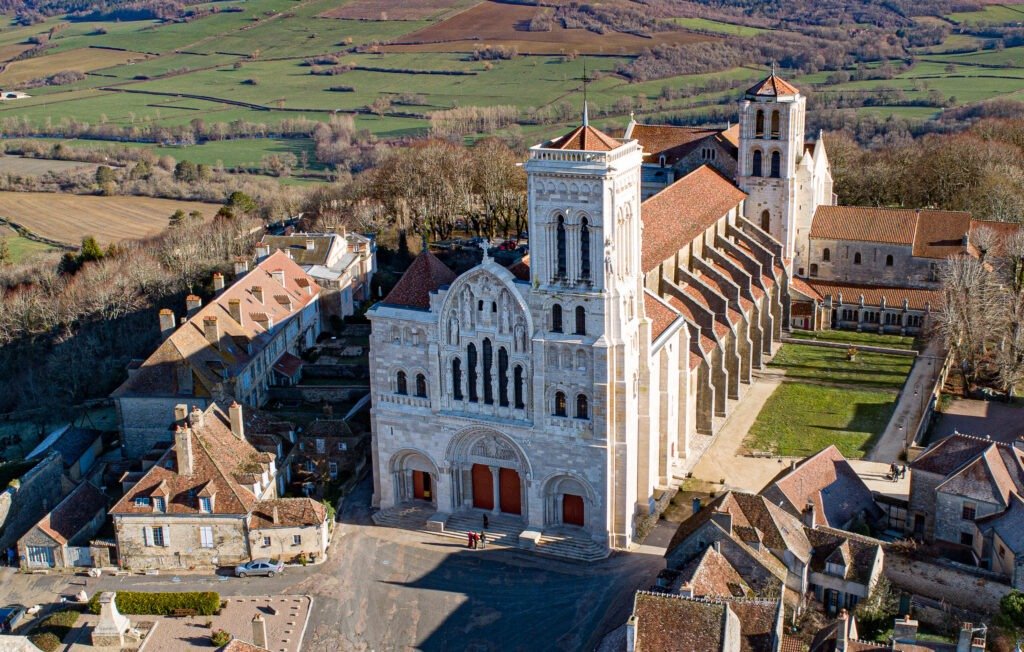
4. Basilica of Sainte-Madeleine, Vézelay – France
Perched on a hilltop in Burgundy, the Basilica of Sainte-Madeleine in Vézelay is one of the most atmospheric Romanesque churches in Europe.
Built in the 11th and 12th centuries, it was a major pilgrimage church and a starting point for pilgrims heading to Santiago de Compostela.
The basilica is famous for its luminous interior and sculpted capitals filled with symbolic imagery.
During the summer solstice, sunlight aligns perfectly along the nave, creating an almost mystical experience.
Vézelay shows that Romanesque architecture could be both solid and poetic, combining structure with spiritual emotion.
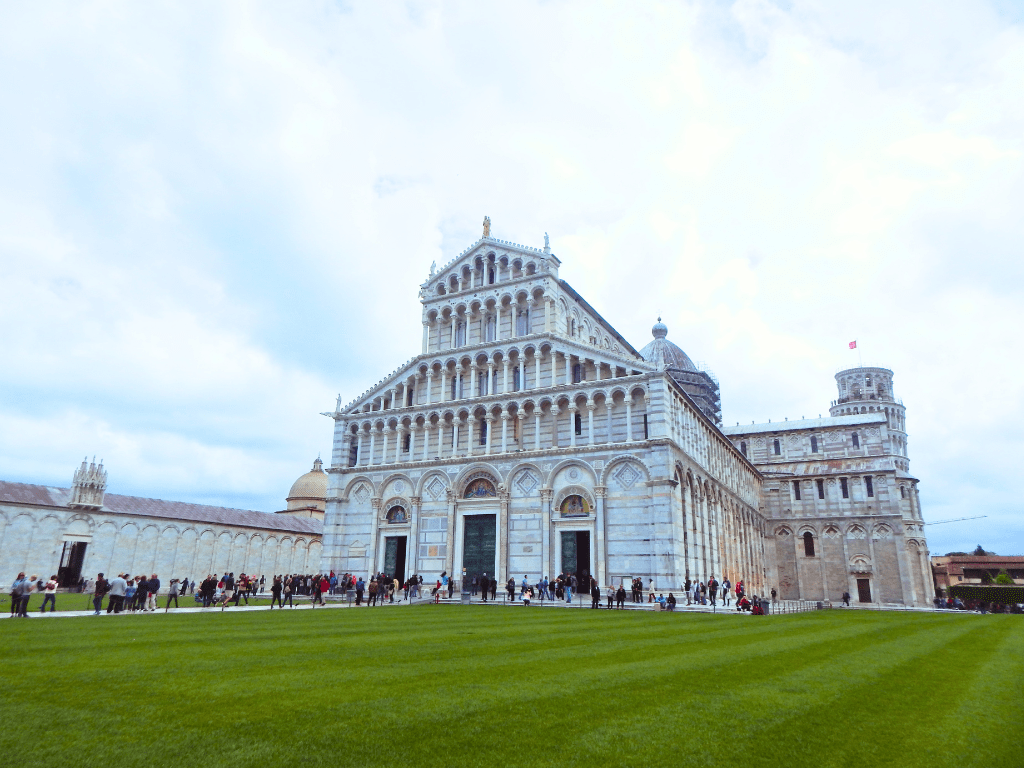
5. Pisa Cathedral – Italy
Often overshadowed by the Leaning Tower, Pisa Cathedral is a masterpiece of Italian Romanesque architecture.
Built in the 11th century, it represents the Pisan Romanesque style, which blends Roman, Byzantine, and Islamic influences.
The marble façade, rounded arches, and decorative arcades give the cathedral a lighter, more elegant feel than many northern Romanesque churches.
Inside, mosaics and classical proportions create a harmonious and refined space.
Pisa Cathedral demonstrates how Romanesque architecture adapted beautifully to Mediterranean aesthetics.
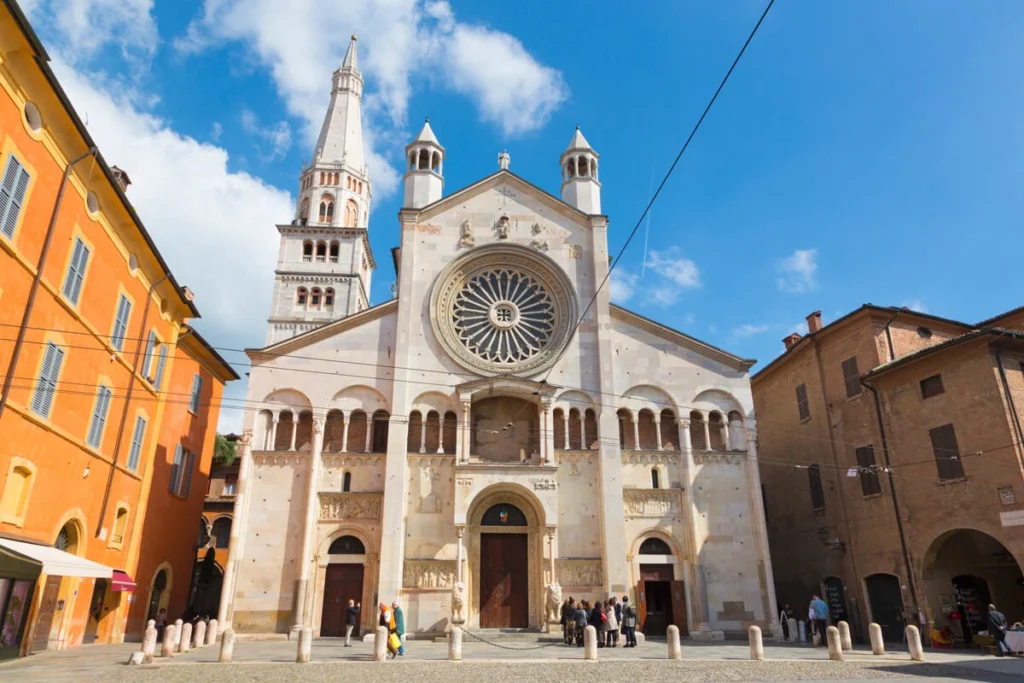
6. Modena Cathedral – Italy
Modena Cathedral is one of the purest expressions of Romanesque architecture in Italy and a UNESCO World Heritage Site.
Built in the late 11th century, it is famous for the sculptural work of Wiligelmus, whose reliefs on the façade depict scenes from Genesis.
The building feels balanced, calm, and deeply human in scale.
Inside, the structure is logical and uncluttered, allowing the architecture and sculpture to speak clearly.
Modena is a perfect example of Romanesque architecture as a unified artistic vision.
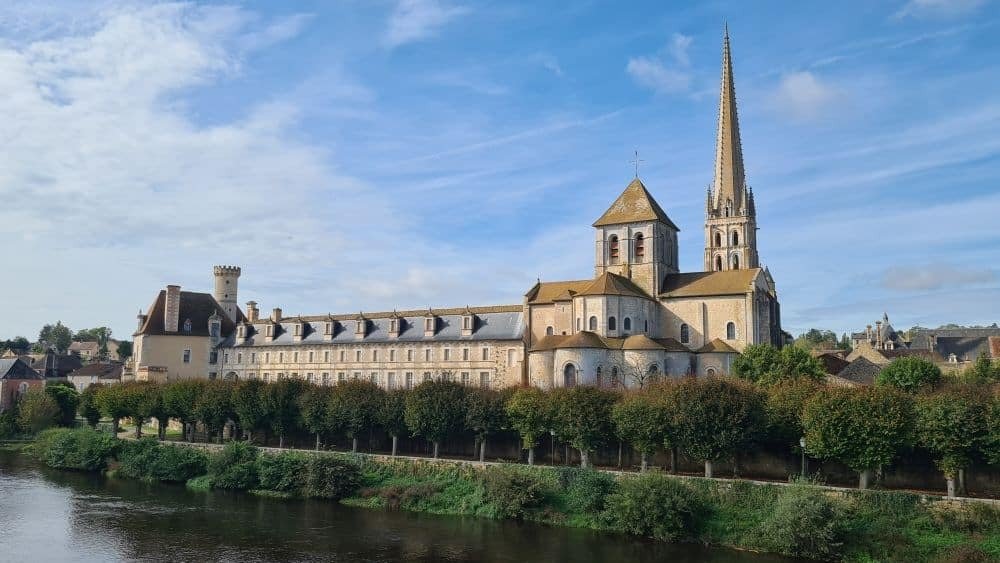
7. Abbey of Saint-Savin-sur-Gartempe – France
Saint-Savin Abbey is unique among Romanesque churches thanks to its extraordinary painted barrel vault, covered with frescoes depicting Old Testament scenes.
Dating from the late 11th century, these paintings are some of the best-preserved Romanesque murals in Europe.
Architecturally, the abbey is simple and sturdy, allowing the artwork to take center stage.
The visual storytelling reflects how Romanesque churches educated largely illiterate congregations through imagery.
Saint-Savin is essential for understanding Romanesque art beyond stone sculpture.
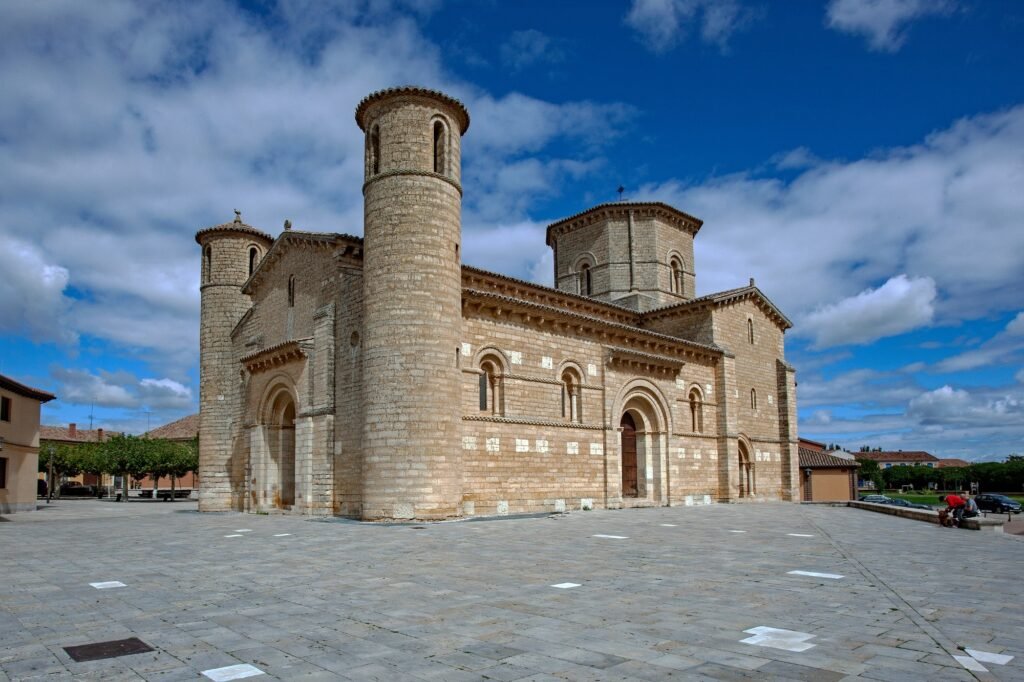
8. San Martín de Frómista – Spain
San Martín de Frómista is often considered one of the most perfectly preserved Romanesque churches in Spain.
Built in the 11th century along the Camino de Santiago, it is small, symmetrical, and architecturally pure.
Its rounded apses, squat towers, and sculpted capitals make it feel like a Romanesque model brought to life.
Because of its size, visitors can easily appreciate every architectural detail.
This church shows Romanesque architecture in its most disciplined and harmonious form.
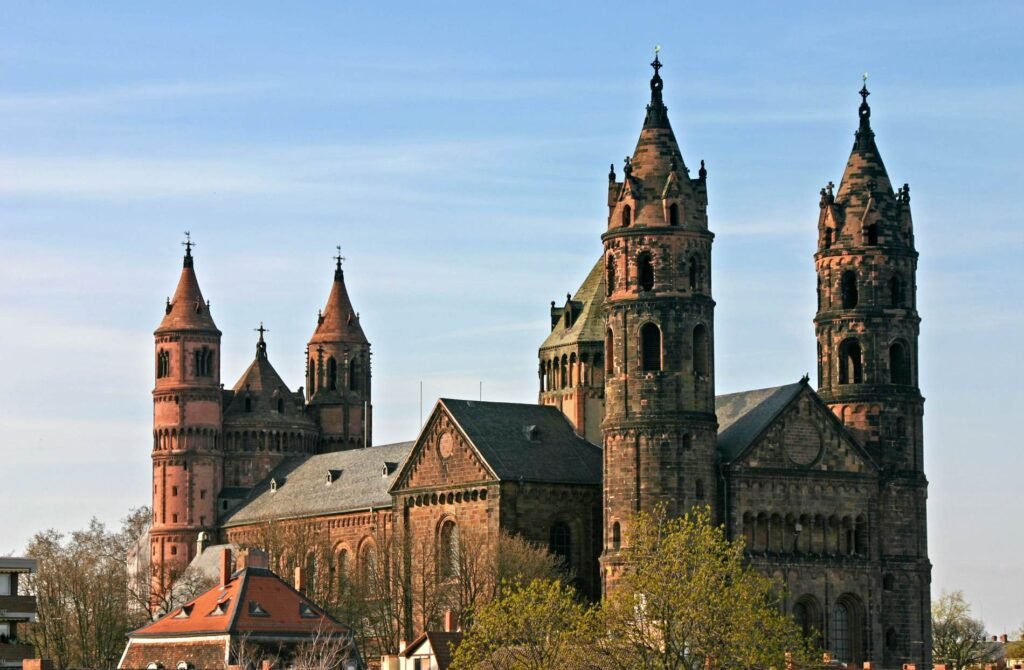
9. Worms Cathedral – Germany
Worms Cathedral is a masterpiece of German Romanesque architecture, built primarily in the 12th century.
With its four towers, thick walls, and monumental westwork, it has an almost fortress-like presence.
The cathedral played a major role in medieval political history, including events related to the Holy Roman Empire.
Inside, the atmosphere is solemn and commanding, emphasizing permanence and authority.
Worms is Romanesque architecture at its most imposing and authoritative.
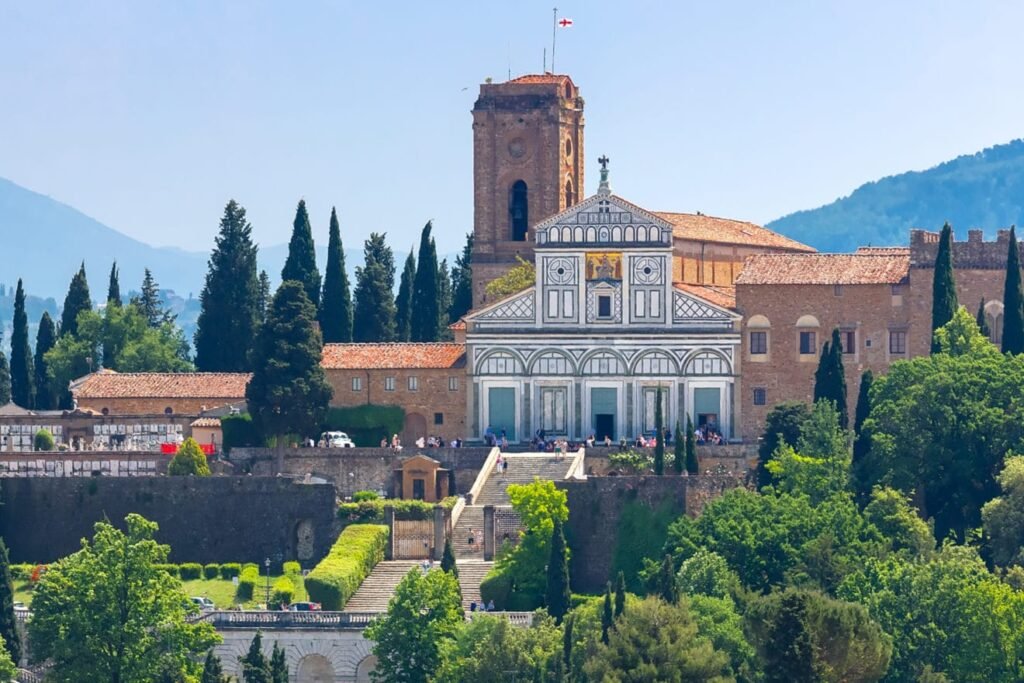
10. San Miniato al Monte – Florence, Italy
Overlooking Florence, San Miniato al Monte is one of the city’s oldest and most beautiful churches.
Built between the 11th and 12th centuries, it represents Tuscan Romanesque architecture at its finest.
The geometric marble façade is iconic, while the interior is serene and carefully proportioned.
The crypt preserves a strong medieval atmosphere, and the apse mosaic adds a Byzantine touch.
San Miniato offers a peaceful alternative to Florence’s Renaissance landmarks and highlights the city’s medieval roots.
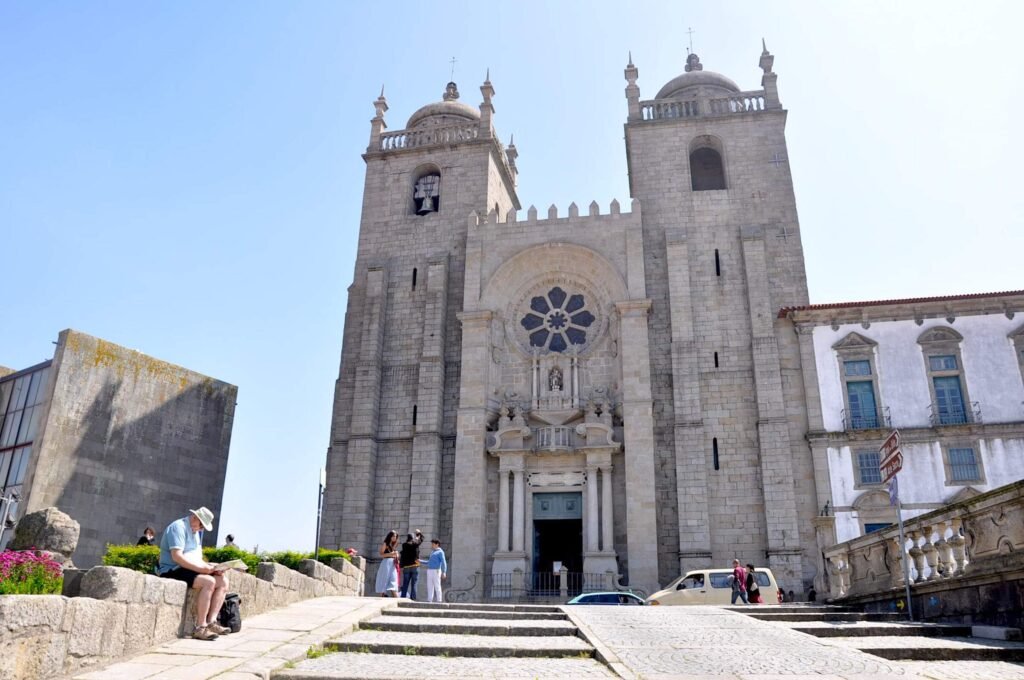
11. Porto Cathedral (Sé do Porto) – Portugal
Porto Cathedral is one of Portugal’s most important Romanesque monuments.
Built in the 12th century, it reflects the turbulent conditions of medieval Portugal, blending religious and defensive architecture.
The thick walls, crenellations, and fortress-like appearance make it visually striking.
Inside, Romanesque elements mix with later Gothic and Baroque additions, creating a layered architectural experience.
It’s an excellent example of Romanesque architecture adapted to frontier and military realities.
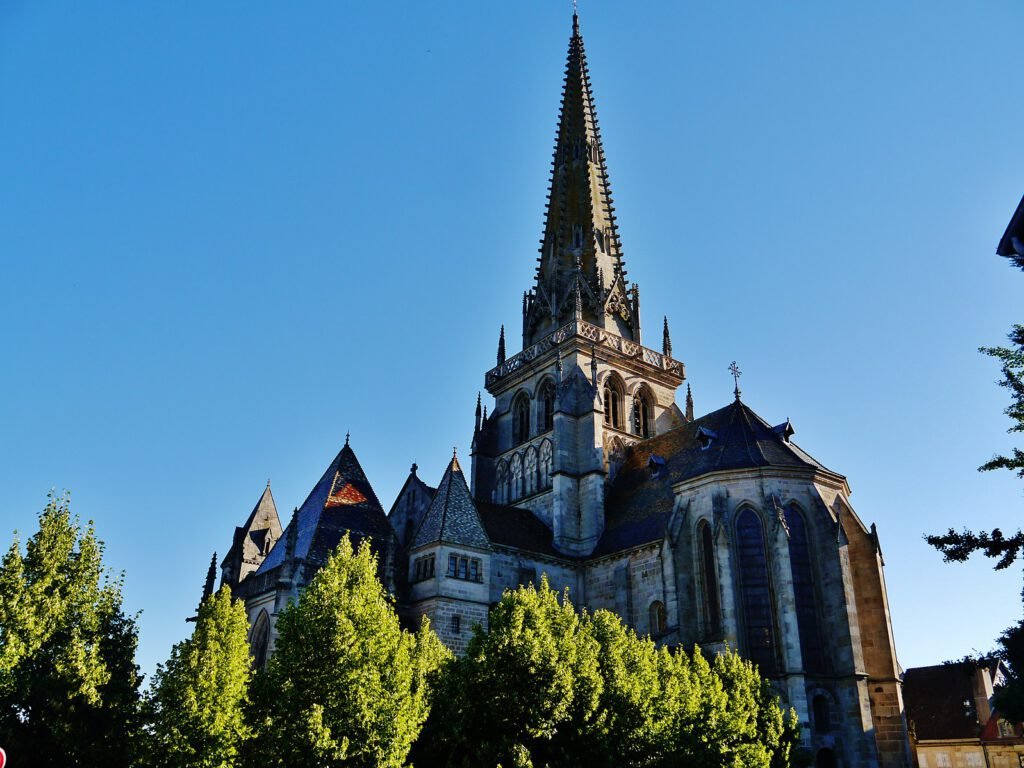
12. Autun Cathedral (Saint-Lazare) – France
Autun Cathedral is renowned for its dramatic Romanesque sculpture, especially the Last Judgment tympanum carved by Gislebertus in the 12th century.
The figures are expressive, emotional, and deeply human, designed to move and instruct medieval worshippers.
Architecturally, the cathedral features a long barrel-vaulted nave and carefully balanced proportions.
The sculptural program transforms theology into unforgettable imagery.
Autun is one of the clearest examples of Romanesque art as storytelling in stone.