9 Petit Palais Masterpieces You Must See
Paris is full of art treasures, but few museums manage to be both breathtaking and underrated like the Petit Palais.
Tucked between the Seine and the Champs-Élysées, this stunning building might not be as famous as the Louvre or Musée d’Orsay, but it’s just as enchanting, and here’s the best part: it’s completely free to visit.
Disclosure: This post does contain affiliate links for which I earn a small commission at no extra cost to you. Any purchases you make through my links help keep the site running. Thanks in advance for your support!
A Bit of History: From Universal Exhibition to Art Haven
The Petit Palais was built for the 1900 Exposition Universelle, a massive world fair that celebrated art, industry, and progress at the turn of the century.
Architect Charles Girault designed it to reflect the optimism of the Belle Époque, that golden era when Paris was the world’s capital of culture, fashion, and creativity.
Standing across from its “big brother,” the Grand Palais, the Petit Palais was never meant to be temporary like many exhibition structures of its time.
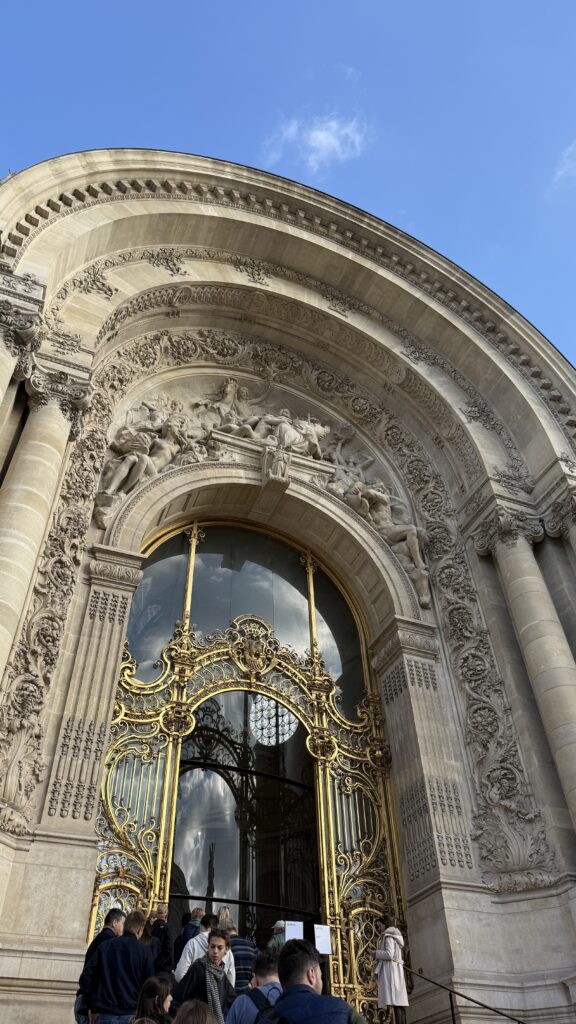
Its magnificent Beaux-Arts design, with its sweeping colonnades, golden gates, and decorative sculptures, made it a lasting landmark.
After the exposition, the building became home to the City of Paris Museum of Fine Arts (Musée des Beaux-Arts de la Ville de Paris).
It officially opened to the public in 1902, and since then, it has preserved and exhibited thousands of works spanning from Antiquity to the early 20th century.
The museum underwent major renovations in the early 2000s, restoring its original beauty while adding modern touches like improved lighting and a charming café overlooking the courtyard garden.
Today, the Petit Palais continues to welcome art enthusiasts, photographers, and curious travelers who often stumble upon it while walking from the Champs-Élysées toward the Seine, only to be completely wowed by its beauty.
Inside the Petit Palais: Layout and Collection
The Petit Palais’s collection is surprisingly rich for a free museum.
It houses paintings, sculptures, and decorative arts from ancient times through the early 1900s, divided into thematic galleries arranged around a central courtyard and a serene garden.
When you enter, the first thing you’ll notice is the majestic entrance hall with its mosaics, marble floors, and vaulted ceilings decorated with golden frescoes.
From there, the museum’s layout naturally leads you through a journey across centuries of art.
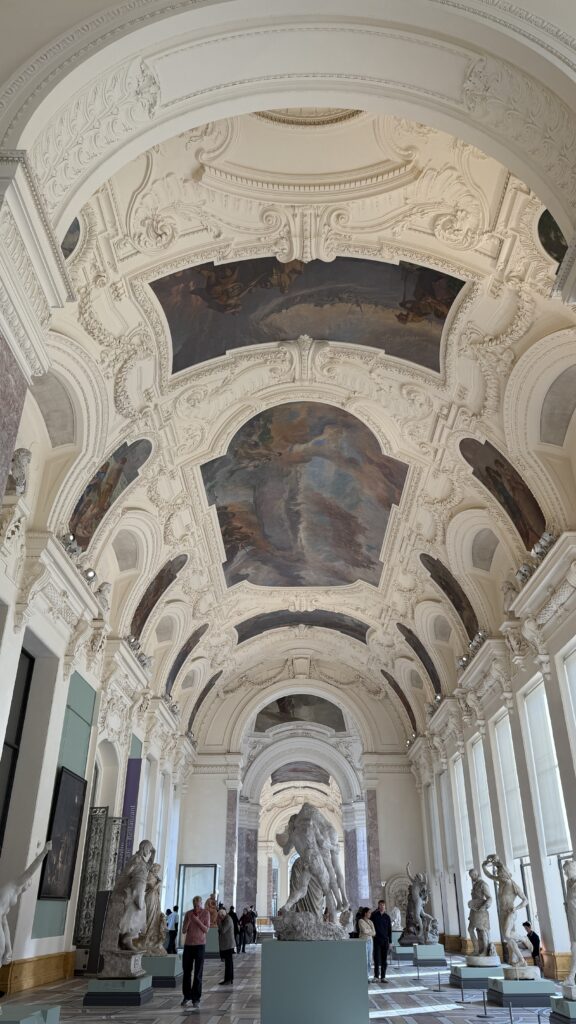
The ground floor focuses on classical and Renaissance art, think religious paintings, mythological themes, and sculptures from Ancient Greece and Rome.
You’ll also find works from the Dutch Golden Age and Italian masters.
Moving toward the 19th-century galleries, you’ll enter a world of Romanticism, Impressionism, and Symbolism, with works by big names like Monet, Courbet, Delacroix, and Rodin.
The upper-level galleries and side rooms display decorative art pieces, furniture, and small-scale sculptures, while the beautifully painted ceilings and architectural details make every corner worth a look.
One of the highlights of the visit is the museum’s central garden, surrounded by colonnades and decorated with mosaics.
It’s a peaceful spot where you can take a break at the café, enjoy a drink, and soak in the elegance of your surroundings, the kind of tranquil beauty that makes the Petit Palais such a unique Parisian experience.
Masterpieces to see at the Petit Palais
Even though the museum isn’t overwhelmingly large, it’s filled with gems from some of the world’s greatest artists.
Here are the must-see masterpieces to look out for during your visit:
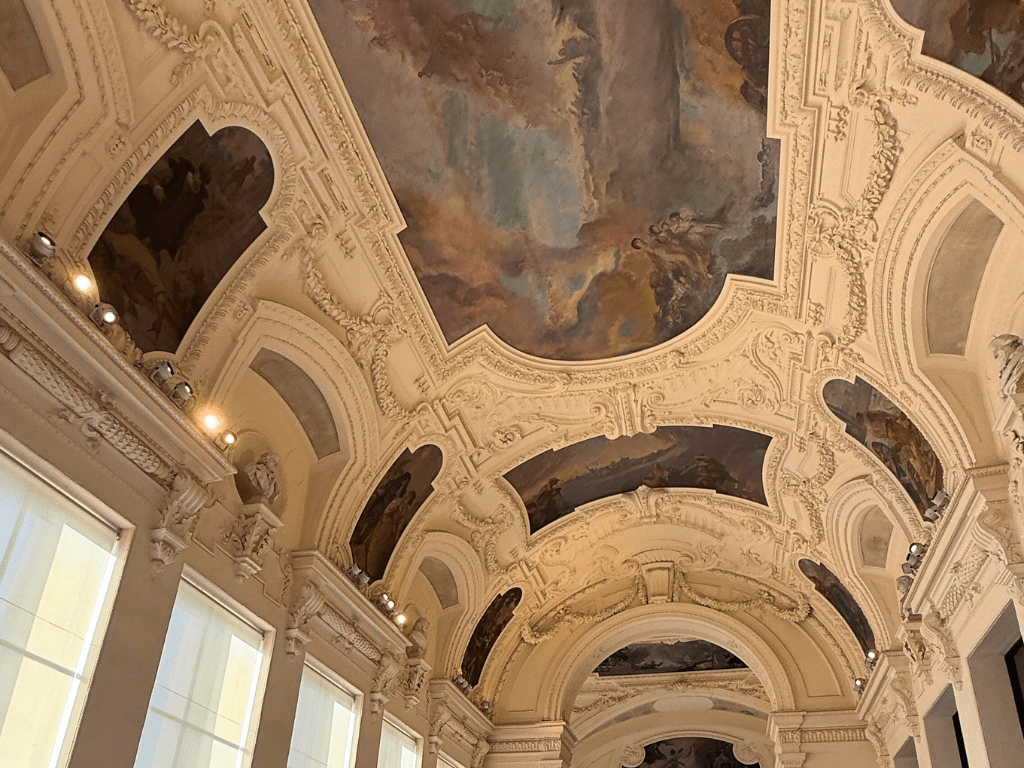
1. The Ceiling Paintings
Before you even look at the artworks on the walls, don’t forget to look up!
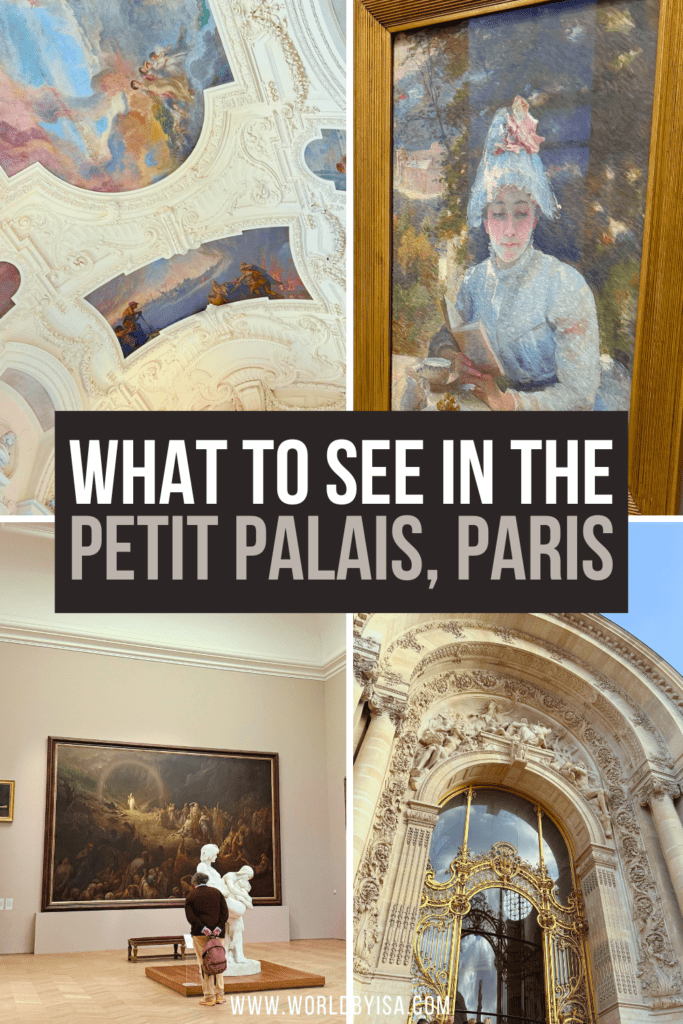
The ceiling frescoes of the Petit Palais are breathtaking, created by a range of artists who decorated the domes and arches with allegories of art, nature, and knowledge.
These golden-hued murals perfectly embody the Belle Époque aesthetic, with graceful figures, lush color palettes, and a dreamlike sense of beauty.
They give the museum the feeling of a grand palace, and set the tone for everything else you’ll see.
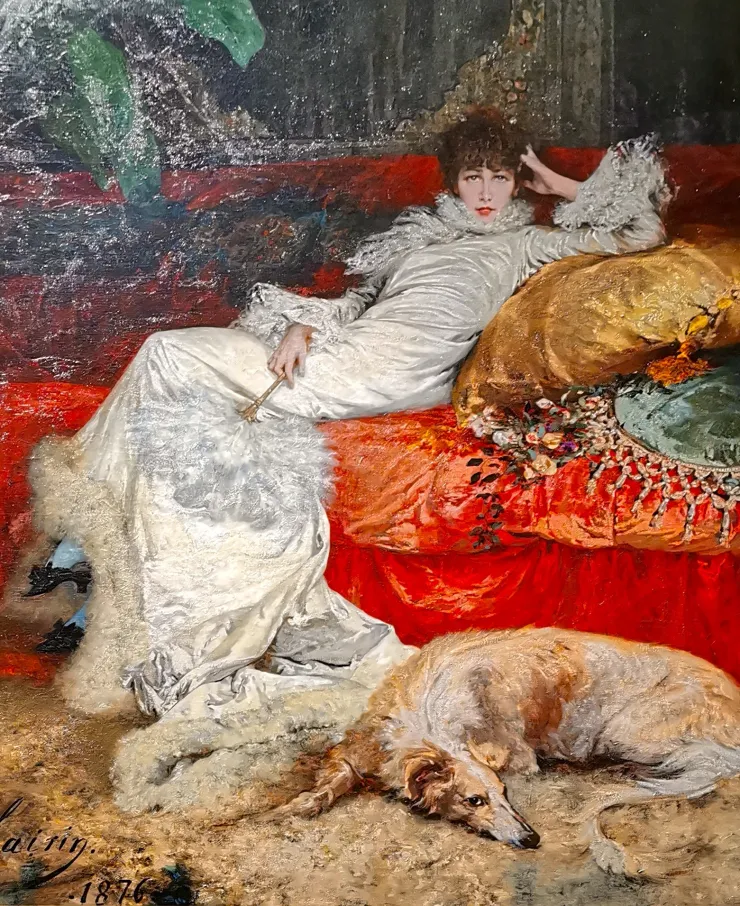
2. “The Portrait of Sarah Bernhardt” – Georges Clairin (1876)
This dramatic portrait of Sarah Bernhardt, the most famous French actress of her time, is one of the museum’s most beloved paintings.
Clairin, a close friend of the actress, captures her in an almost regal pose, dressed in flowing robes with her trademark auburn hair cascading around her face.
The portrait perfectly captures the diva’s magnetic charm and theatrical personality.
It’s one of the best examples of Belle Époque portraiture, elegant, glamorous, and just a little bit mysterious.
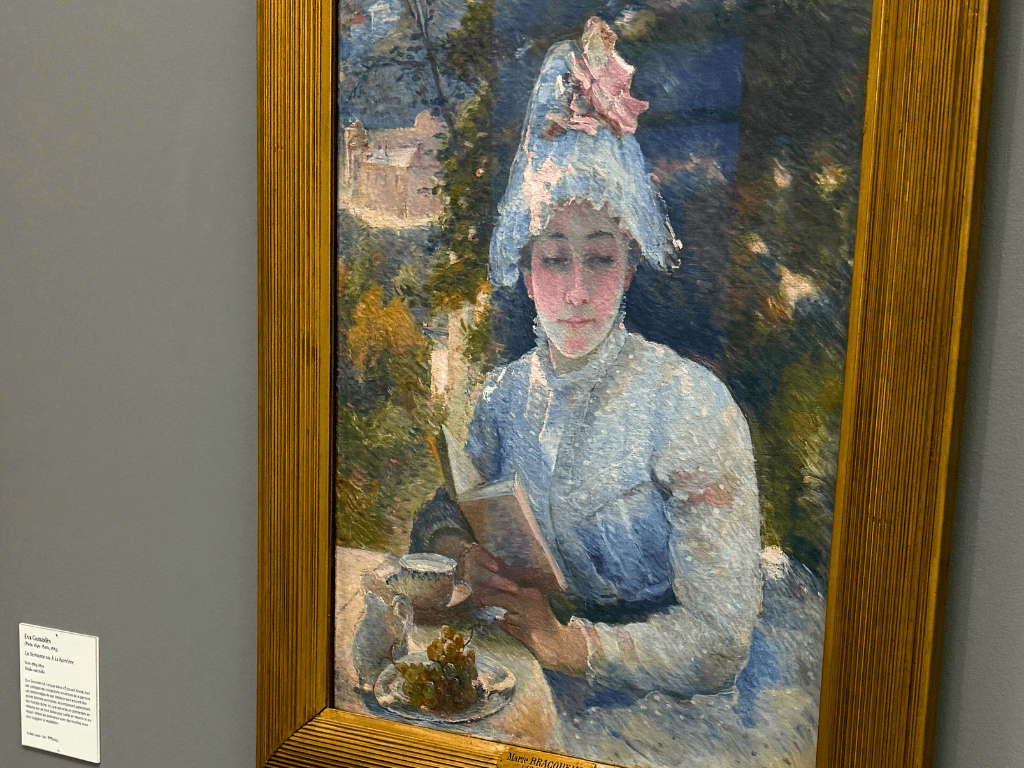
3. “Afternoon Tea” (1880) – Marie Bracquemond
One of the few female artists represented in major 19th-century collections, Marie Bracquemond was part of the Impressionist circle that included Monet and Degas.
Her Afternoon Tea is a delicate yet powerful scene showing two women enjoying tea on a sunlit terrace.
The brushwork and soft tones reveal her mastery of light and atmosphere.
It’s not just a painting of leisure; it’s a quiet celebration of women’s independence and intimacy in a time when female artists were often overlooked.
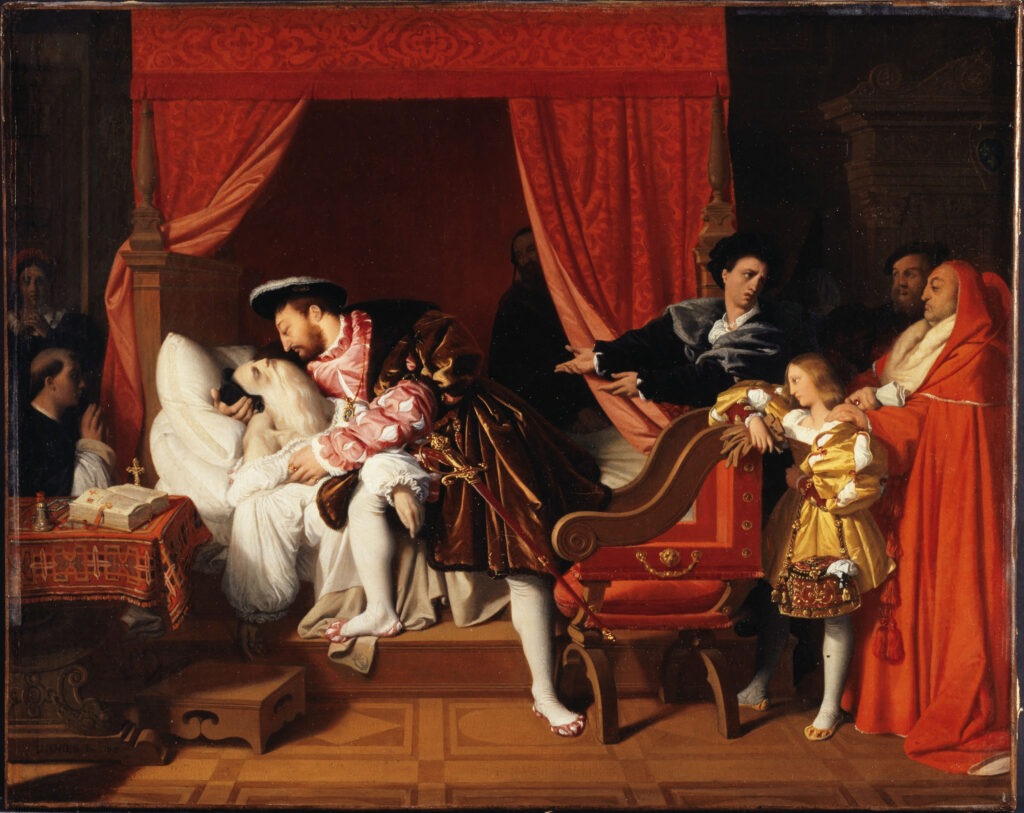
4. “Death of Leonardo da Vinci” – Jean-Auguste-Dominique Ingres
This neoclassical masterpiece by Ingres portrays the final moments of Leonardo da Vinci, dying in the arms of the French King François I.
The work blends history and emotion beautifully.
Leonardo’s serene expression contrasts with the king’s grief, creating a touching image of admiration between artist and patron.
It’s one of the Petit Palais’s most powerful historical scenes, and a reminder of the deep connection between art and royalty in the Renaissance era.
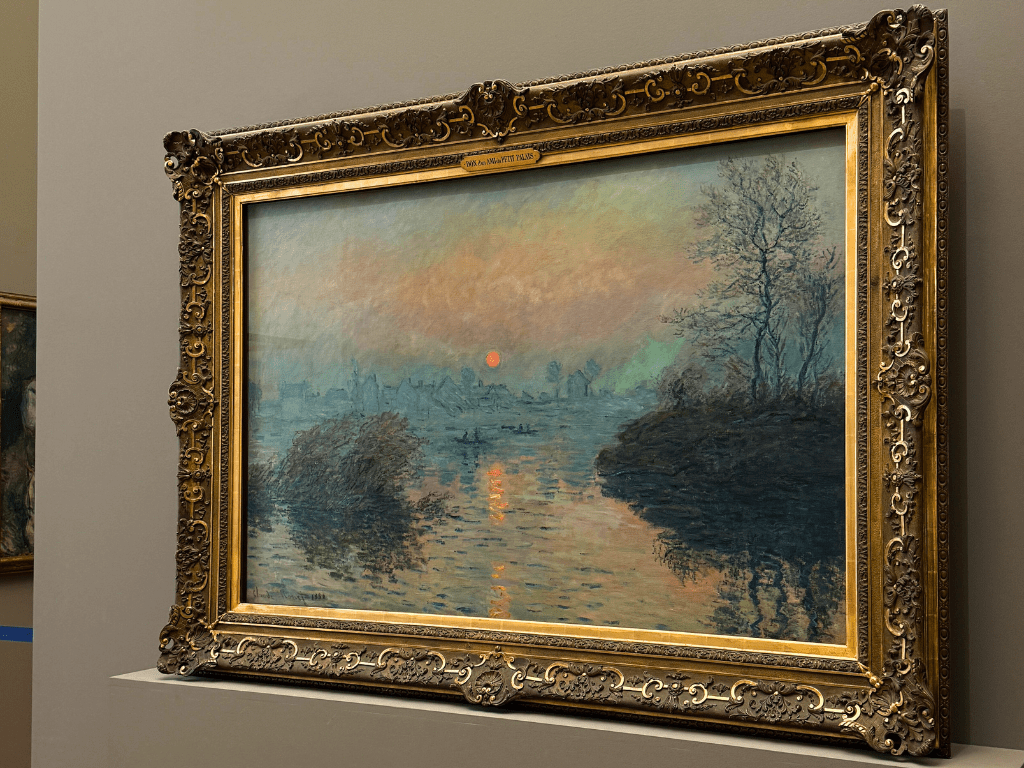
5. “Sunset on the Seine” (1880) – Claude Monet
No Paris museum is complete without a Monet, and this one captures the soft glow of sunset over the Seine River.
Monet’s brushstrokes bring the water to life, shimmering with pink, orange, and violet hues.
It’s a moment of pure tranquility, simple yet mesmerizing.
The painting reflects Monet’s obsession with light and movement, and it’s a must-see for anyone who loves Impressionism.
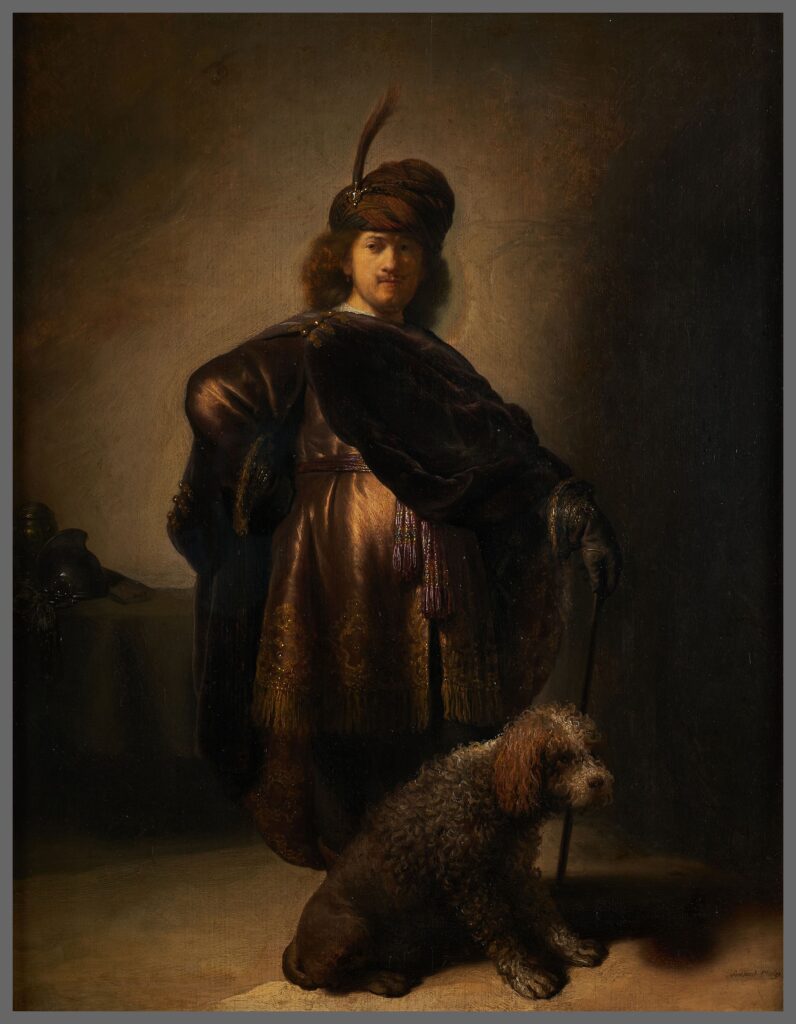
6. “Self-Portrait in Oriental Costume” – Rembrandt
This striking portrait by Rembrandt van Rijn shows the artist dressed in exotic Eastern-style garments, with rich fabrics and dramatic lighting.
It’s a great example of Rembrandt’s fascination with costume and character, and, of course, his unmatched skill in using light and shadow to reveal emotion.
Seeing this Dutch master’s work in Paris is a treat, and it’s one of the oldest and most prestigious paintings in the museum’s collection.
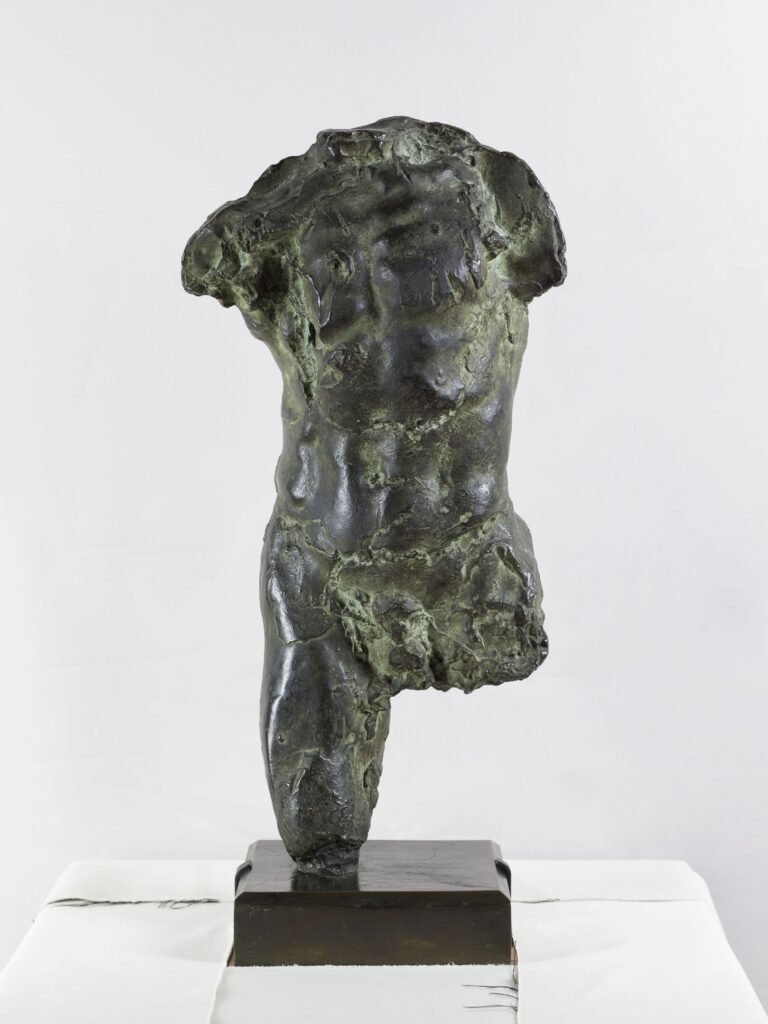
7. “Torse d’homme” – Auguste Rodin
Rodin is best known for The Thinker and The Kiss, but this male torso sculpture is equally impressive in its simplicity.
“Torse d’homme” captures the raw energy and movement of the human body, unfinished, powerful, and sensual.
Displayed in the sculpture gallery surrounded by natural light, it’s a piece that truly shows Rodin’s genius for expressing life through stone.
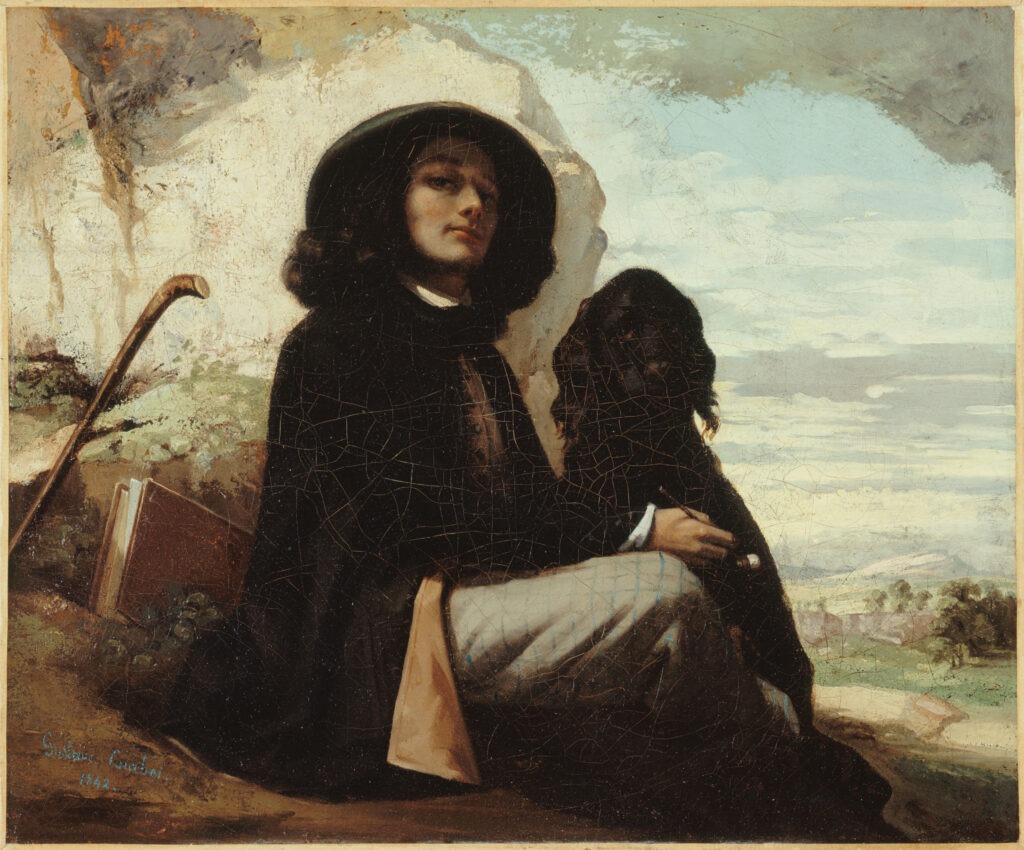
8. “Self-Portrait with Black Dog” (1844) – Gustave Courbet
Before he became known for his bold realism, Courbet painted this striking self-portrait showing himself reclining in the countryside with his loyal black dog.
It’s a deeply personal image, confident but introspective, with lush landscapes behind him.
Courbet painted himself as both the artist and the romantic hero, which makes it one of the museum’s most intriguing portraits.
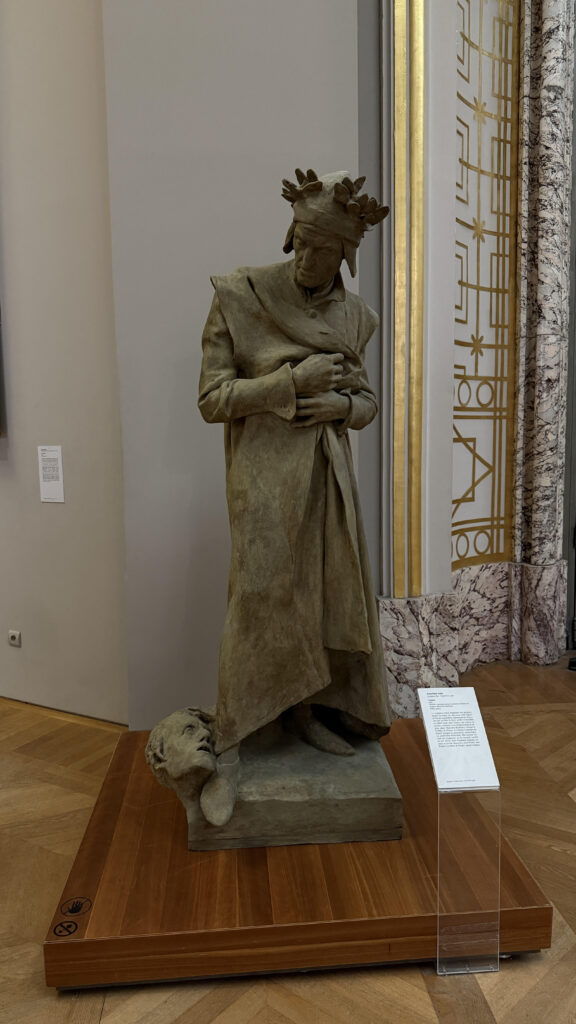
9. “Dante” (1879) – Jean-Paul Aubé
This bronze sculpture of the Italian poet Dante Alighieri is both intense and beautiful.
Aubé depicts Dante with a contemplative expression, his features sharp and full of determination.
The work captures not just a likeness, but the spirit of the poet who wrote The Divine Comedy.
Standing before it, you can almost feel the weight of his thoughts and the timeless power of his words.
Visiting the Petit Palais: Tips for Your Trip
If you’re planning to explore the Petit Palais, here are some tips to make the most of your visit:
- Admission is free! The permanent collection is completely free to visit. Only temporary exhibitions require tickets.
- Opening hours: Usually open from 10 a.m. to 6 p.m., Tuesday through Sunday. It’s closed on Mondays and public holidays.
- Best time to visit: Go in the morning or late afternoon to avoid crowds and enjoy the soft light streaming through the glass roof — perfect for photos.
- Don’t skip the garden: The inner courtyard is one of Paris’s hidden gems, with mosaics, arcades, and a lovely café where you can relax surrounded by art and architecture.
- Photography: Non-flash photography is allowed, and the lighting inside makes for great shots of both the artworks and the stunning building itself.
- Getting there: The closest metro stations are Champs-Élysées–Clemenceau (Lines 1 and 13) and Franklin D. Roosevelt (Lines 1 and 9).
The Petit Palais may not have the size of the Louvre or the fame of the Musée d’Orsay, but that’s exactly what makes it special.
It’s intimate, free, and visually stunning, a perfect spot to slow down and experience Parisian art at its finest.